

© 2026 Made for Planet • Privacy Policy • Terms & Conditions
Platform by Mission Sustainability
By Rittika rana • Jun 23, 2026
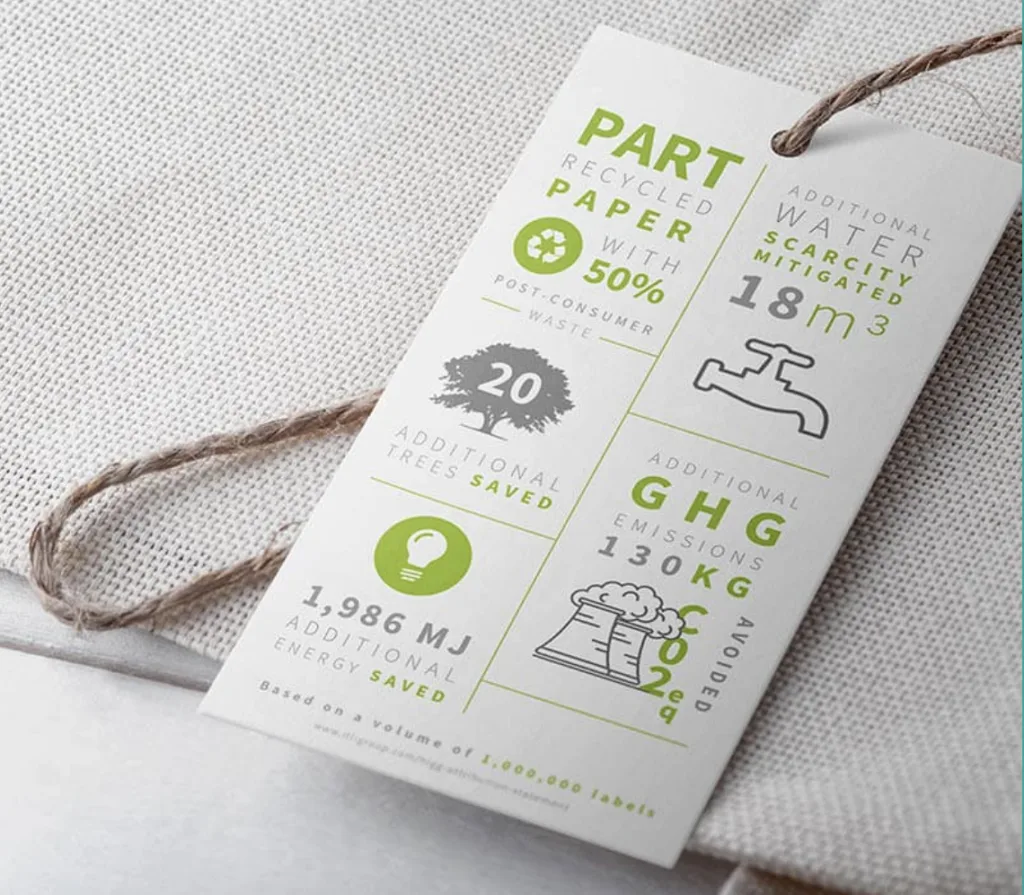
“Eco-friendly” is now printed on almost everything.
You see it on skincare bottles, carry bags, cleaning products, food packaging, clothing tags, office accessories, home products, and delivery boxes. The words are familiar: natural, clean, vegan, biodegradable, compostable, recyclable, plastic-free, carbon-neutral, zero-waste.
They sound responsible. They make a product feel better. But they do not always mean the same thing.
Some eco labels are useful. Some are vague. Some depend on where you live and what disposal systems exist around you. Some claims are technically true but still incomplete. That is why reading sustainability claims properly has become an important part of buying better.
Made For Planet has already covered the larger issue of greenwashing in its blog on what greenwashing means. This article goes one step further and focuses on the words we see directly on product labels.
An eco label should be the beginning of a question, not the end of your decision.

Sustainability claims are often used as shortcuts. A brand has very little space on a product label, so it uses simple words to communicate a bigger idea. But simple words can hide complicated realities.
A product may say “recyclable,” but that does not mean it will actually be recycled in your city. It may say “compostable,” but that may require an industrial composting facility. It may say “natural,” but that does not explain how the ingredient was sourced. It may say “carbon-neutral,” but that might depend on offsets instead of real emission reduction.
The Federal Trade Commission’s Green Guides explain that environmental claims should be clear, specific, and properly qualified so that consumers are not misled. The European Commission has also worked on rules around green claims to address misleading environmental messaging and improve consumer trust.
For everyday buyers, the lesson is simple: the clearer the claim, the more useful it is. The vaguer the claim, the more questions you should ask.
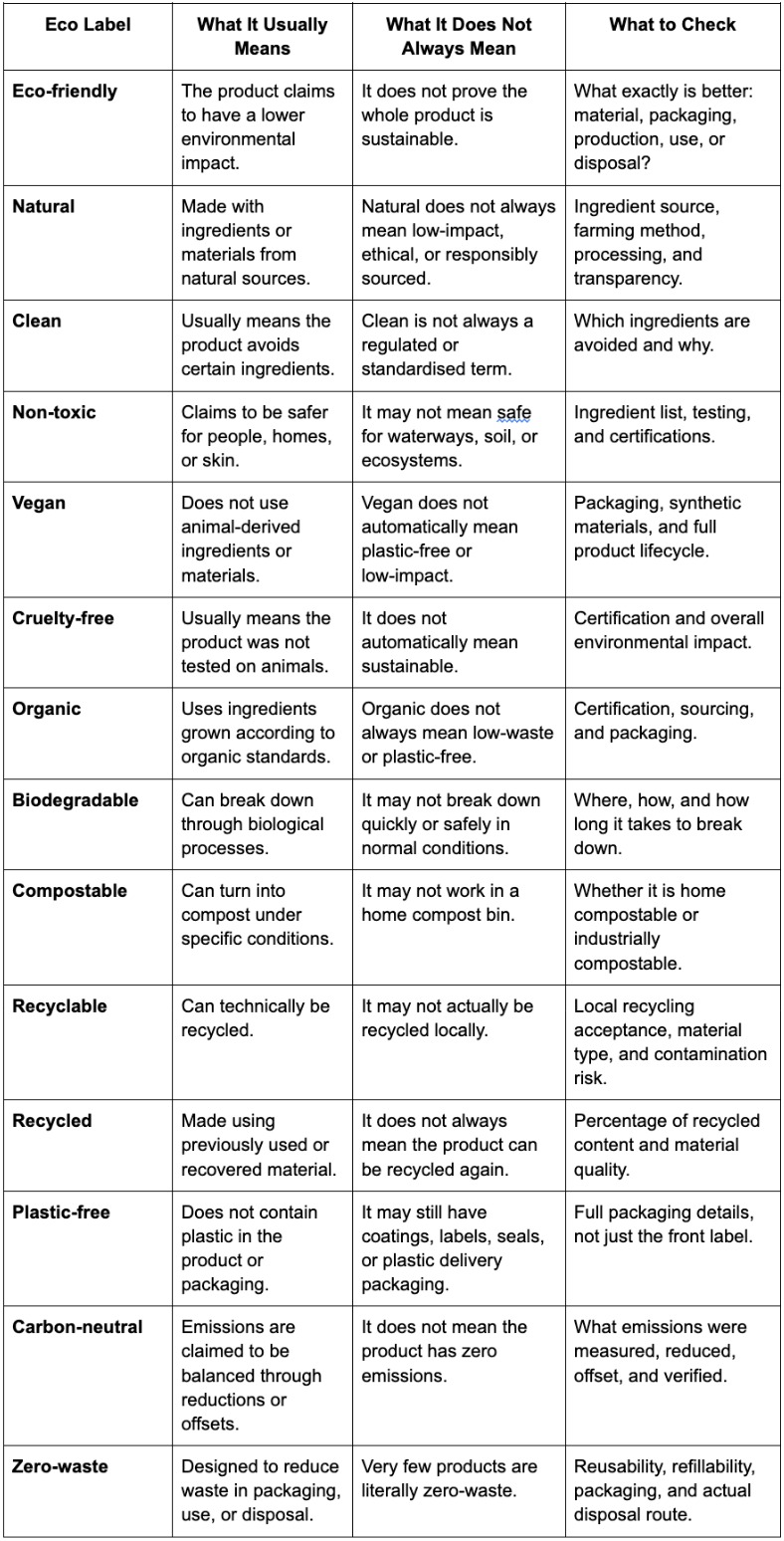
This table shows why one word is rarely enough. A good label should tell you what has improved, how it has improved, and what proof supports the claim.
Some claims need more attention because they depend heavily on systems outside the product itself.
Biodegradable is one of them. A biodegradable product may still need specific conditions to break down. If it ends up in a landfill without enough oxygen, light, or microbial activity, it may not behave the way the label suggests.
Compostable is also often misunderstood. Some compostable products are meant for industrial composting facilities, not home compost bins. The EPA’s guidance on plastic recycling and composting explains that compostable plastic is biodegradable, but not every biodegradable plastic is compostable. That distinction matters because the right disposal system is essential.
Recyclable is another claim that depends on local systems. A material may be recyclable in theory but not accepted by your local recycler. Mixed-material packaging, small parts, pumps, tubes, labels, and food contamination can make recycling difficult.
Carbon-neutral should also be read carefully. It may include emission reductions, but it may also rely on offsets. A stronger claim should explain what was measured, how emissions were reduced, what was offset, and whether the process was verified. The point is not that these claims are always wrong. The point is that they need context.

A sustainability claim does not exist in isolation.
A compostable bowl only helps if it reaches the right composting facility. A recyclable bottle only helps if it is collected, sorted, cleaned, and processed. A refillable product only reduces waste if people actually keep refilling it.
This is why end-of-life matters. The product’s journey does not end when you buy it. It continues after use.
The Ellen MacArthur Foundation describes circular economy thinking as a system where products and materials are kept in use and waste is designed out. Applied to everyday products, this means we need to look beyond the label and ask how the product will actually be used, reused, recycled, composted, or discarded.
For example, a plastic-free product may reduce plastic use, but if it is fragile and gets replaced often, the benefit may be reduced. A reusable product may be better than a disposable one, but only if it is used many times. A recycled product may be useful, but its quality, durability, and recyclability still matter.
Sustainability depends on the product, the user, and the system around it.
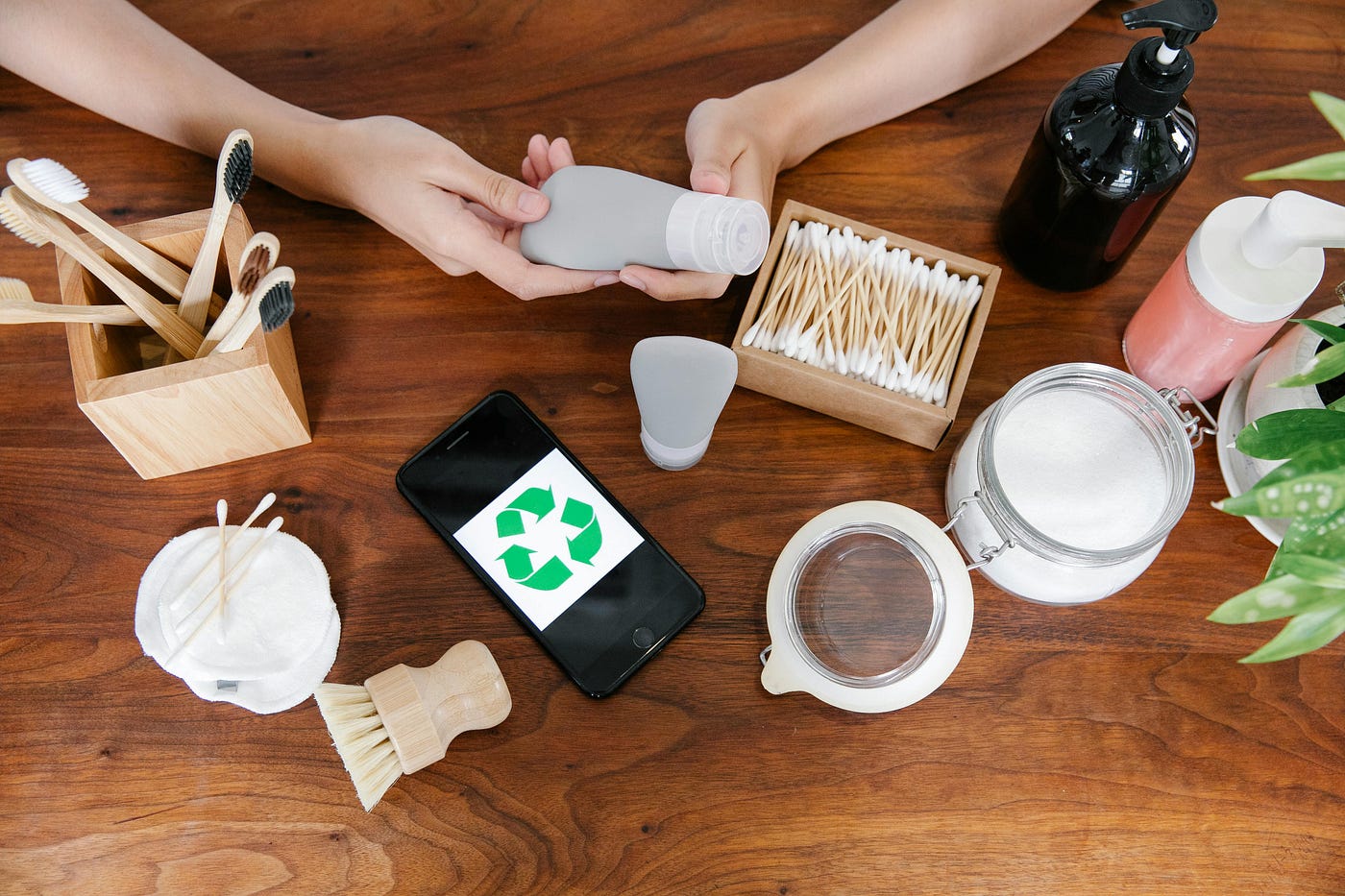
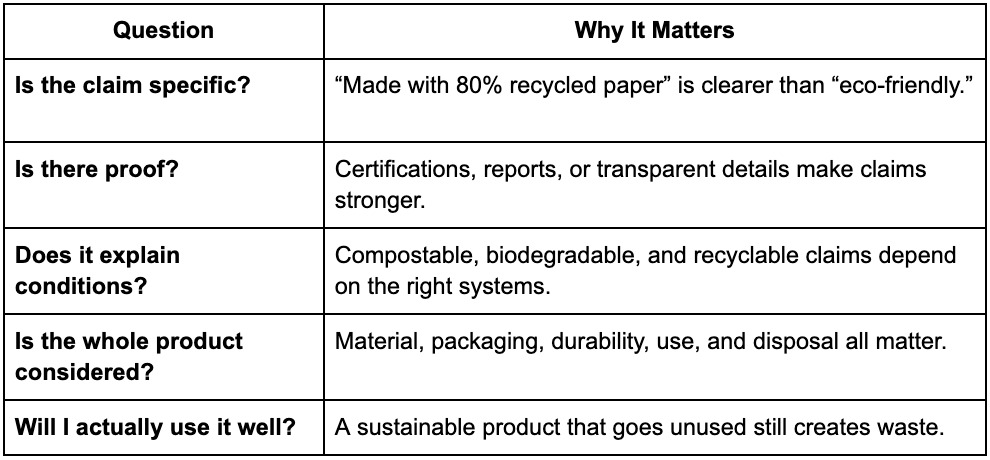
Before trusting an eco label, ask these five questions:
This checklist is useful across categories: skincare, cleaning products, packaging, fashion, bags, personal care, kitchen products, and home essentials.
The goal is not to become suspicious of every brand. The goal is to read labels better.
Eco labels show up differently across product categories.
In skincare, “natural” and “clean” may not explain packaging waste. In cleaning products, “non-toxic” should be supported by ingredient transparency. In fashion, “vegan” does not automatically mean low-impact. In packaging, “compostable” only helps when composting systems exist. In carry bags, “reusable” matters only if the bag is used many times.
This is why sustainability should not be judged by one word on the front label. It should be understood through need, material, durability, packaging, use, and disposal.
Sometimes the better choice is a certified product. Sometimes it is a refill. Sometimes it is a reusable alternative. Sometimes it is simply not buying something unnecessary.

Eco labels are useful, but they are not a shortcut to sustainability.
A word like natural, recyclable, compostable, vegan, plastic-free, or carbon-neutral can help you notice a better option. But it should also make you ask a few more questions. What part of the product is actually better? Is the claim backed by proof? Can the product be reused, recycled, composted, or disposed of properly where you live?
The strongest sustainability claims are not the loudest ones. They are the clearest ones.
Buying better does not mean trusting every green-looking label. It means looking beyond the front of the pack and understanding the product as a whole — its material, packaging, use, durability, and end-of-life.
Because in the end, eco labels should not just help a product look responsible.
They should help us make more responsible choices.
Eco labels are words, symbols, or certifications used to describe the environmental or ethical qualities of a product.
Eco-friendly is a broad claim. It should be supported by specific details such as recycled content, refillable packaging, or lower-impact materials.
No. Compostable products are biodegradable under specific composting conditions, but not all biodegradable products are compostable.
Not always. Recycling depends on local collection, sorting, material type, contamination, and recycling infrastructure.
No. Vegan products avoid animal-derived ingredients, but they may still use plastic packaging or synthetic materials.
Plastic-free means the product or packaging does not contain plastic, but it is still worth checking for coatings, labels, seals, or delivery packaging.
Carbon-neutral usually means emissions are balanced through reductions and/or offsets, but the claim should explain what was measured and verified.
Recycled means the product contains previously used material. Recyclable means it can potentially be recycled after use.
Look for specific claims, proof, certifications, transparent material information, and clear disposal instructions.
No. Eco labels are useful, but sustainability also depends on durability, need, packaging, use, and end-of-life.
Related Categories
Share this blog


