

© 2026 Made for Planet • Privacy Policy • Terms & Conditions
Platform by Mission Sustainability
By Rittika rana • Mar 06, 2026

Agriculture has always depended on soil, sunlight, and water. For thousands of years, farming meant cultivating land. But as the world faces rapid urbanisation, climate pressures, and increasing demand for food, new approaches to agriculture are emerging.
One of the most promising is hydroponic farming — a method of growing plants without soil, using nutrient-rich water solutions instead. Instead of relying on soil to deliver nutrients, hydroponic systems provide plants with precisely balanced nutrients dissolved in water.
According to the Food and Agriculture Organization (FAO), innovative farming approaches such as hydroponics and controlled environment agriculture are gaining importance as the global population grows and pressure on land and water resources increases.
Hydroponics does not replace traditional farming. But it offers a new way of thinking about food production in a world where natural resources are becoming increasingly strained.
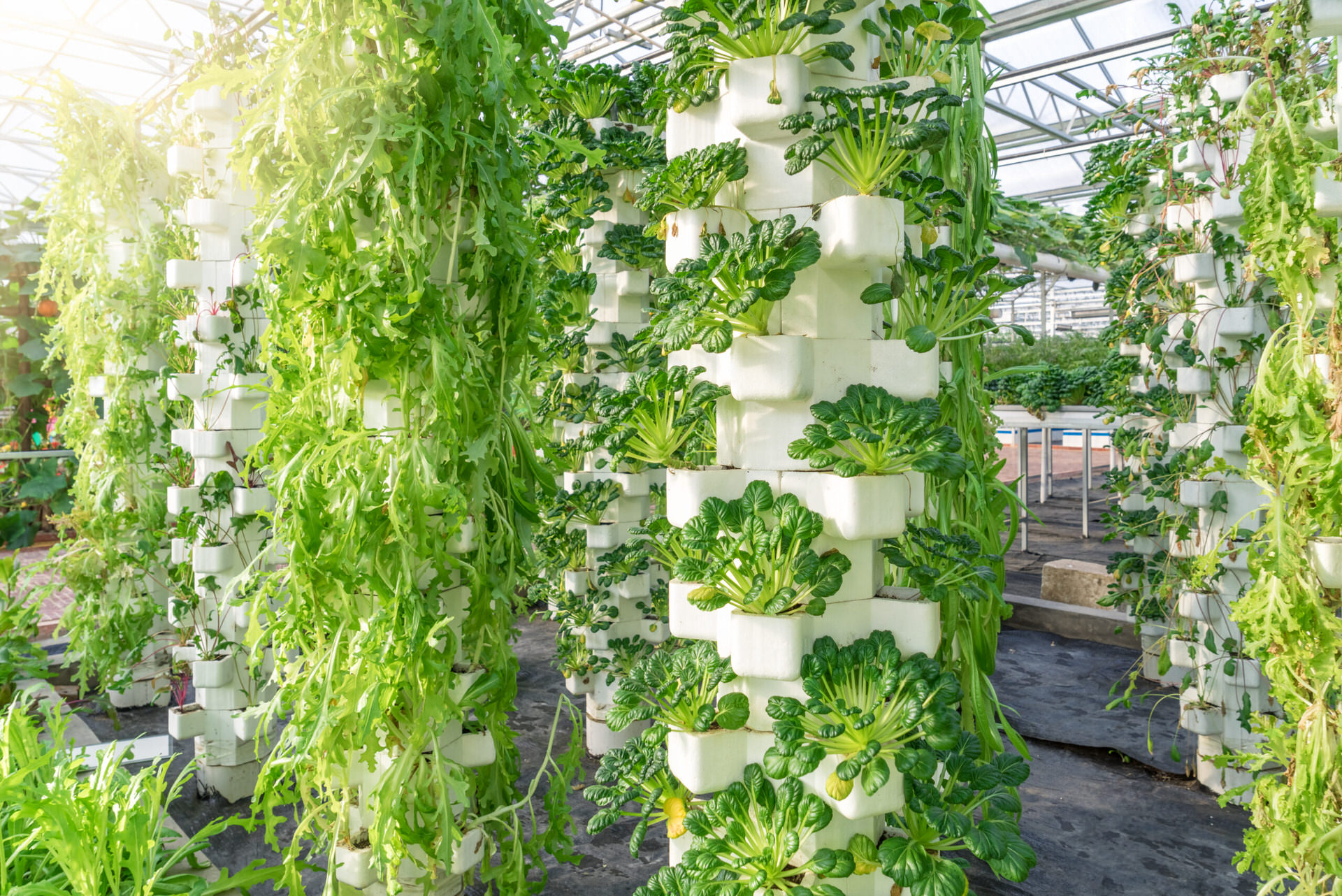
Hydroponic farming is a method of growing plants without soil. Instead, plants are cultivated in a nutrient-rich water solution that provides all the essential minerals needed for growth.
In conventional agriculture, soil acts as a reservoir for nutrients and water. In hydroponics, this role is replaced by carefully balanced nutrient solutions delivered directly to plant roots.
Plants may be supported by inert materials such as coconut coir, perlite, or clay pellets, but the nutrients themselves come from water rather than soil.
Hydroponic systems can be used in:
This flexibility allows food to be produced in places where traditional farming would be difficult or impossible.
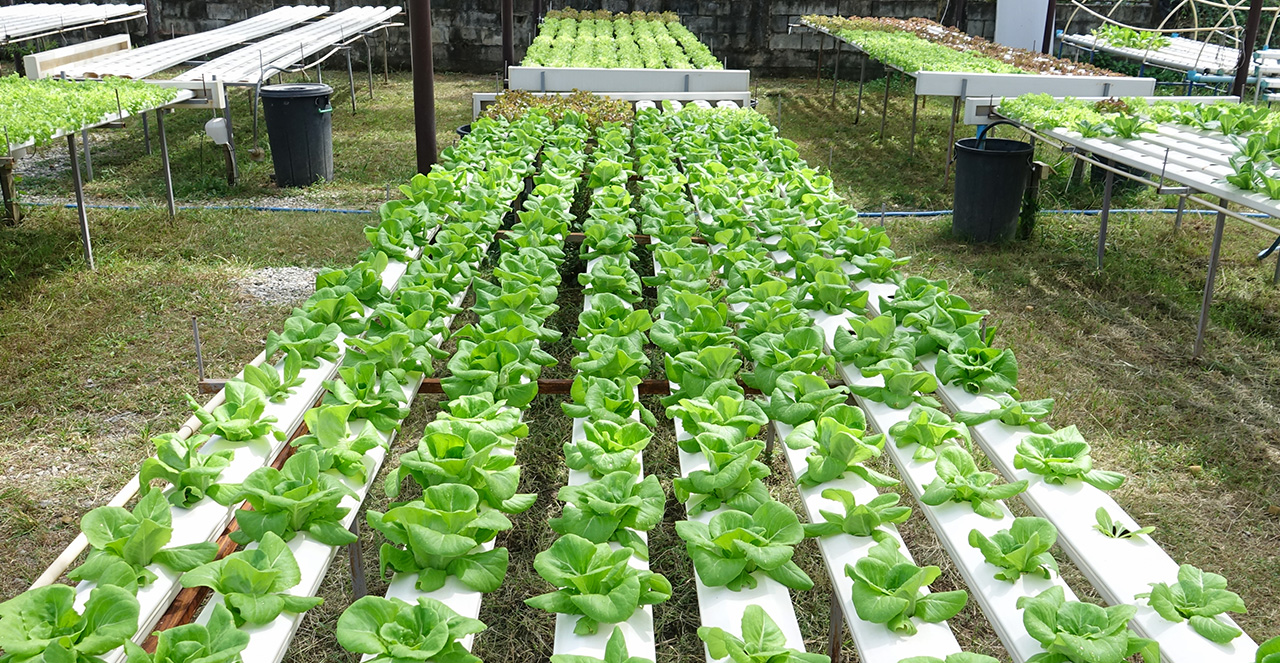
Hydroponic farming relies on a simple principle: plants need water, nutrients, light, and oxygen to grow. Soil itself is not essential.
A typical hydroponic system contains:
By controlling these conditions precisely, farmers can optimise plant growth and reduce resource waste.
Several hydroponic techniques are commonly used.
Plants float on a platform while their roots remain submerged in oxygenated nutrient water.
A thin stream of nutrient solution flows continuously over plant roots.
Nutrient solution is delivered directly to plant roots through drip irrigation systems.
Roots are suspended in air and misted with nutrient solutions, allowing maximum oxygen exposure.
These systems allow farmers to carefully regulate plant nutrition, often resulting in faster growth cycles and higher yields.

Global agriculture is under pressure from several converging forces.
The world population is expected to reach nearly 10 billion by 2050, increasing demand for food production. At the same time, climate change, soil degradation, and water scarcity are making conventional agriculture more challenging.
The United Nations Environment Programme notes that agriculture is both a major driver of environmental change and one of the sectors most vulnerable to climate disruption.
Hydroponic farming is attracting attention because it addresses several of these pressures simultaneously.
It allows crops to be grown in controlled environments where water use, nutrient delivery, and climate conditions can be carefully managed.
In regions with limited arable land or extreme climates, hydroponics offers a way to maintain local food production.
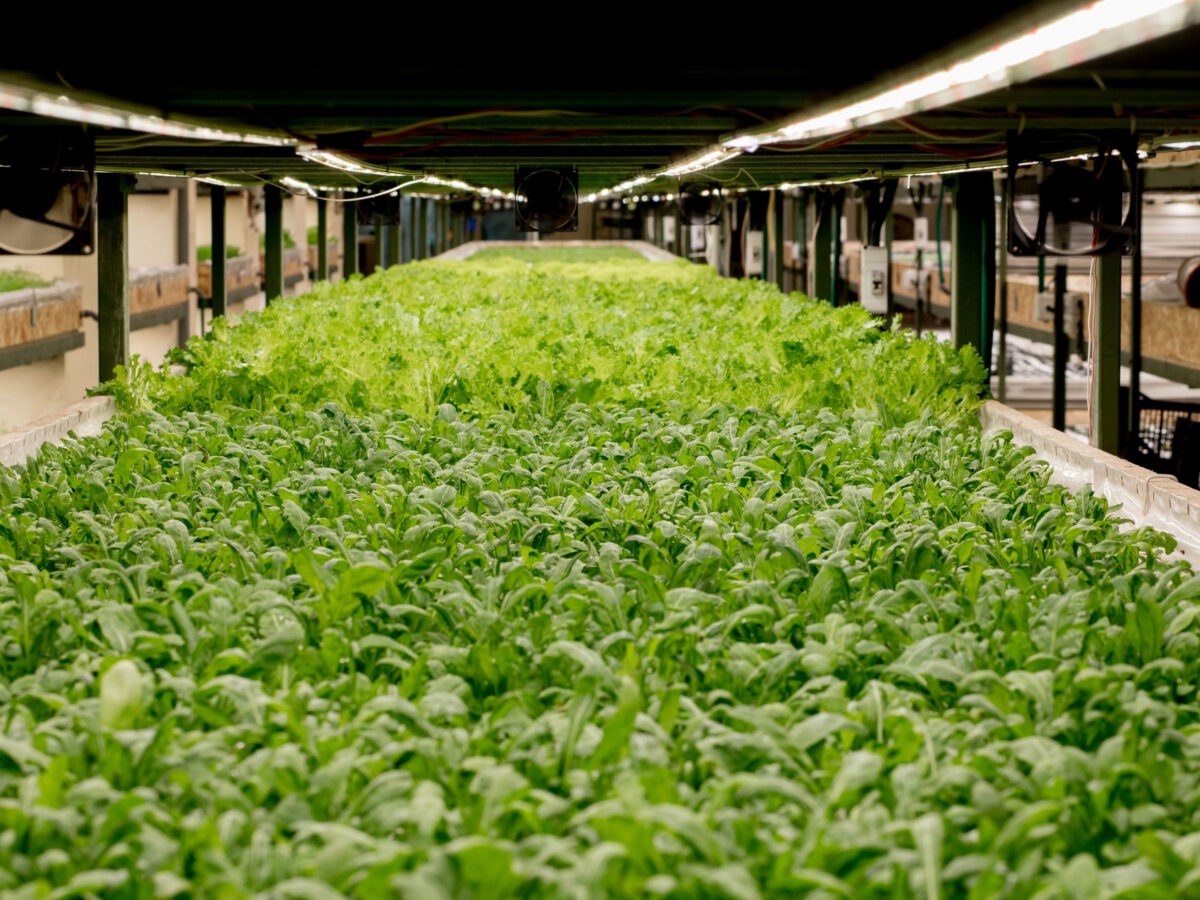
One of the most widely cited advantages of hydroponic farming is water efficiency.
Traditional agriculture often loses significant water through evaporation, runoff, and soil absorption. Hydroponic systems, by contrast, typically operate in closed or semi-closed loops where water is recirculated.
Studies referenced by the Food and Agriculture Organization suggest that hydroponic systems can use significantly less water than conventional agriculture — in some cases reducing water consumption by up to 90%.
This efficiency is particularly important in regions facing increasing water stress.
By delivering water directly to plant roots and recycling unused nutrient solutions, hydroponics minimises waste while maintaining optimal growing conditions.
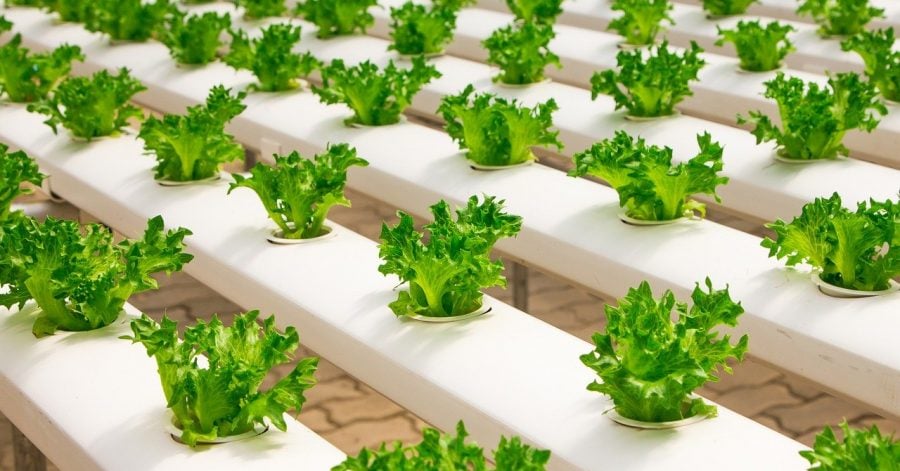
Another major advantage of hydroponic systems is their compatibility with urban environments.
Cities are expanding rapidly, and transporting food from distant farms contributes to emissions, supply chain vulnerabilities, and food loss.
Hydroponic farming allows food to be grown closer to where it is consumed.
Urban hydroponic farms can be established in:
According to research highlighted by the World Economic Forum, urban agriculture technologies such as hydroponics and vertical farming are increasingly being explored as part of resilient food systems in densely populated cities.
Producing food closer to urban populations can reduce transportation emissions, improve freshness, and strengthen local food security.

Hydroponics is often discussed in the context of sustainable agriculture because it can reduce several environmental pressures associated with conventional farming.
Hydroponic systems can produce high yields in smaller spaces, making them suitable for areas where land is limited.
Controlled indoor environments reduce exposure to pests and diseases, often decreasing the need for chemical pesticides.
Nutrient solutions can be precisely balanced to match plant requirements, reducing fertilizer runoff into rivers and ecosystems.
Temperature, humidity, and lighting can be adjusted to optimize plant health and productivity.
These characteristics make hydroponics particularly attractive for sustainable agriculture initiatives.
However, like all technologies, hydroponics also presents trade-offs.
Despite its advantages, hydroponic farming is not a universal solution for food production.
One challenge is energy use. Indoor hydroponic farms often rely on artificial lighting and climate control systems, which can increase electricity consumption.
Another challenge is the cost of infrastructure. Hydroponic systems require specialised equipment, including pumps, sensors, nutrient systems, and monitoring tools.
Additionally, not all crops are well suited to hydroponic cultivation. Leafy greens, herbs, and some vegetables perform well in hydroponic systems, but staple crops such as wheat, rice, and maize are typically grown using traditional agriculture.
For these reasons, hydroponics is best viewed as a complementary farming method rather than a replacement for soil-based agriculture.

As the global population grows and environmental pressures intensify, the future of agriculture will likely involve a mix of approaches.
Traditional farming will continue to play a vital role in global food production. But new technologies such as hydroponics, vertical farming, and controlled environment agriculture are expanding the ways food can be produced.
These systems offer opportunities to:
The Food and Agriculture Organization has increasingly highlighted the importance of innovation in agriculture as part of global efforts to achieve sustainable food systems.
Hydroponic farming represents one of these innovations.
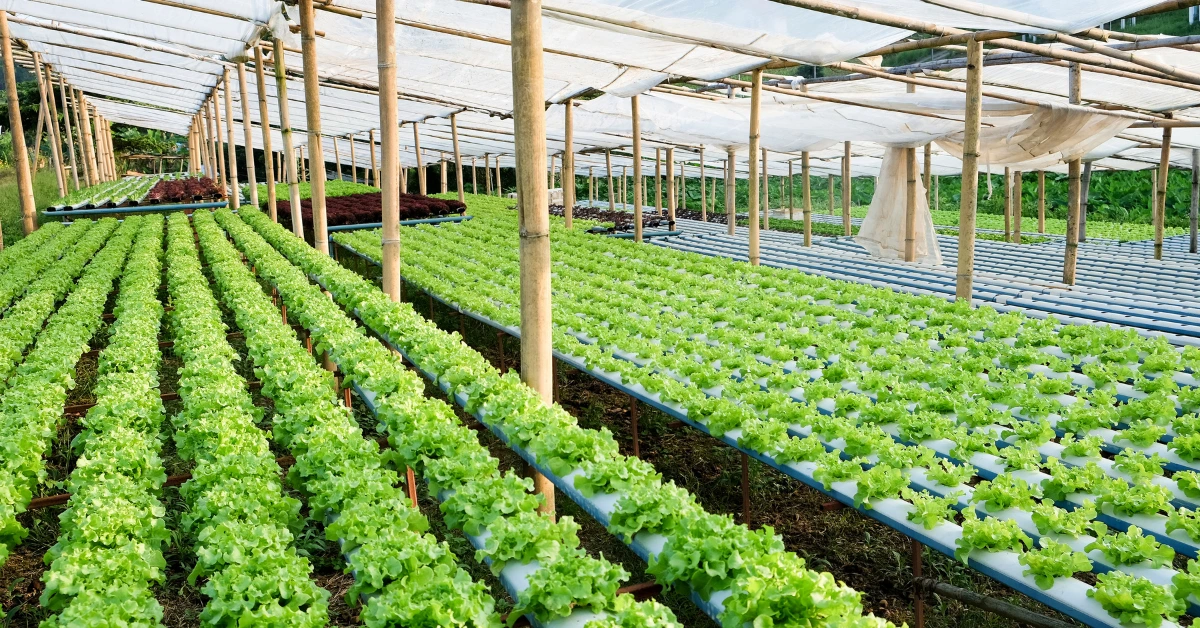
Hydroponic farming challenges one of agriculture’s oldest assumptions: that plants must grow in soil.
By delivering nutrients directly through water, hydroponic systems demonstrate that food production can take many forms. They are not a replacement for traditional farming landscapes. But they provide an additional tool in the effort to build resilient, efficient, and sustainable food systems.
As climate pressures increase and urban populations grow, agriculture will need to evolve.
Hydroponics offers a glimpse of how that evolution might unfold — not by abandoning nature, but by learning how to work with resources more intelligently.
In the decades ahead, feeding the planet will depend not only on growing more food, but on growing it more thoughtfully.
Hydroponic farming is a method of growing plants without soil. Instead, plants grow in nutrient-rich water solutions that provide essential minerals directly to their roots. This system allows crops to grow in controlled environments such as greenhouses or indoor farms.
Hydroponic systems deliver nutrients to plant roots through water instead of soil. Plants are supported by inert materials like coco coir or clay pellets while pumps circulate nutrient solutions and maintain oxygen levels for healthy plant growth.
Hydroponic farming can be more resource-efficient than traditional agriculture. It often uses significantly less water, reduces pesticide use, and allows food to be grown closer to cities, helping lower transportation emissions and land pressure.
Yes. Hydroponic systems typically recycle water in closed loops, allowing them to use up to 80–90% less water than conventional soil-based agriculture, depending on the crop and system design.
Hydroponic systems commonly grow leafy greens such as lettuce, spinach, and kale, along with herbs, tomatoes, cucumbers, and strawberries. Some crops grow better in hydroponic systems than others due to root and nutrient requirements.
Hydroponic farming offers several benefits including faster plant growth, efficient water use, reduced pesticide dependence, and the ability to grow food in urban environments or regions with limited arable land.
Hydroponic farming can require higher initial setup costs, technical knowledge, and energy for lighting or climate control. System failures can also affect crops quickly if nutrient or water circulation stops.
Hydroponics is unlikely to replace traditional agriculture completely. Instead, it complements soil-based farming by enabling food production in cities, controlled environments, and regions where land or water is limited.
Traditional farming relies on soil to supply nutrients and water to plants. Hydroponic farming delivers nutrients directly through water, allowing farmers to control plant growth conditions more precisely.
Yes. Hydroponic farming is widely used in urban agriculture because it can operate indoors, on rooftops, or in vertical farms. This allows cities to produce fresh food closer to consumers.
Related Categories
Share this blog


