

© 2026 Made for Planet • Privacy Policy • Terms & Conditions
Platform by Mission Sustainability
By Rittika rana • Apr 22, 2026
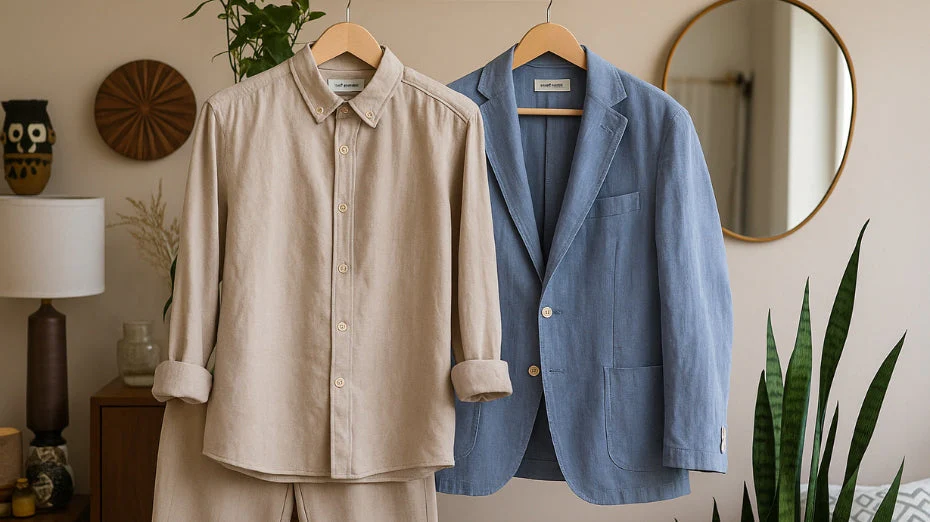
Linen shirts have quietly become a staple. They show up in summer wardrobes, travel packing lists, and increasingly, in conversations around sustainable fashion. They feel lighter, look more relaxed, and are often positioned as the “better” alternative to conventional fabrics.
But what does that really mean?
Is choosing a linen shirt actually a more sustainable decision, or is it just another shift in material without a deeper change in impact?
To answer that, it helps to step back and look at linen not as a product, but as a system.

Linen comes from the flax plant, a crop that has been cultivated for thousands of years. Unlike many modern textiles, flax requires relatively fewer inputs to grow. It can thrive with less water and fewer chemical treatments compared to conventional cotton.
This is one of the main reasons linen is often considered sustainable.
According to insights highlighted by the European Environment Agency, natural fibres like linen generally have lower environmental pressures during cultivation, particularly in terms of water use and chemical dependency.
But raw material is only one part of the story.
What makes linen stand out is not just how it is grown, but how it behaves over time.

Most clothing today is designed for short cycles. It is worn, washed, and replaced quickly. This pattern drives the environmental impact of fashion more than the material itself.
Linen operates differently.
It is stronger than cotton, becomes softer with use, and holds its structure over time. A well-made linen shirt can last for years, not months. That longevity changes the equation.
Because sustainability is not just about how something is made. It is about how long it stays in use.
A shirt that lasts five years will always outperform one that lasts five months, regardless of material.
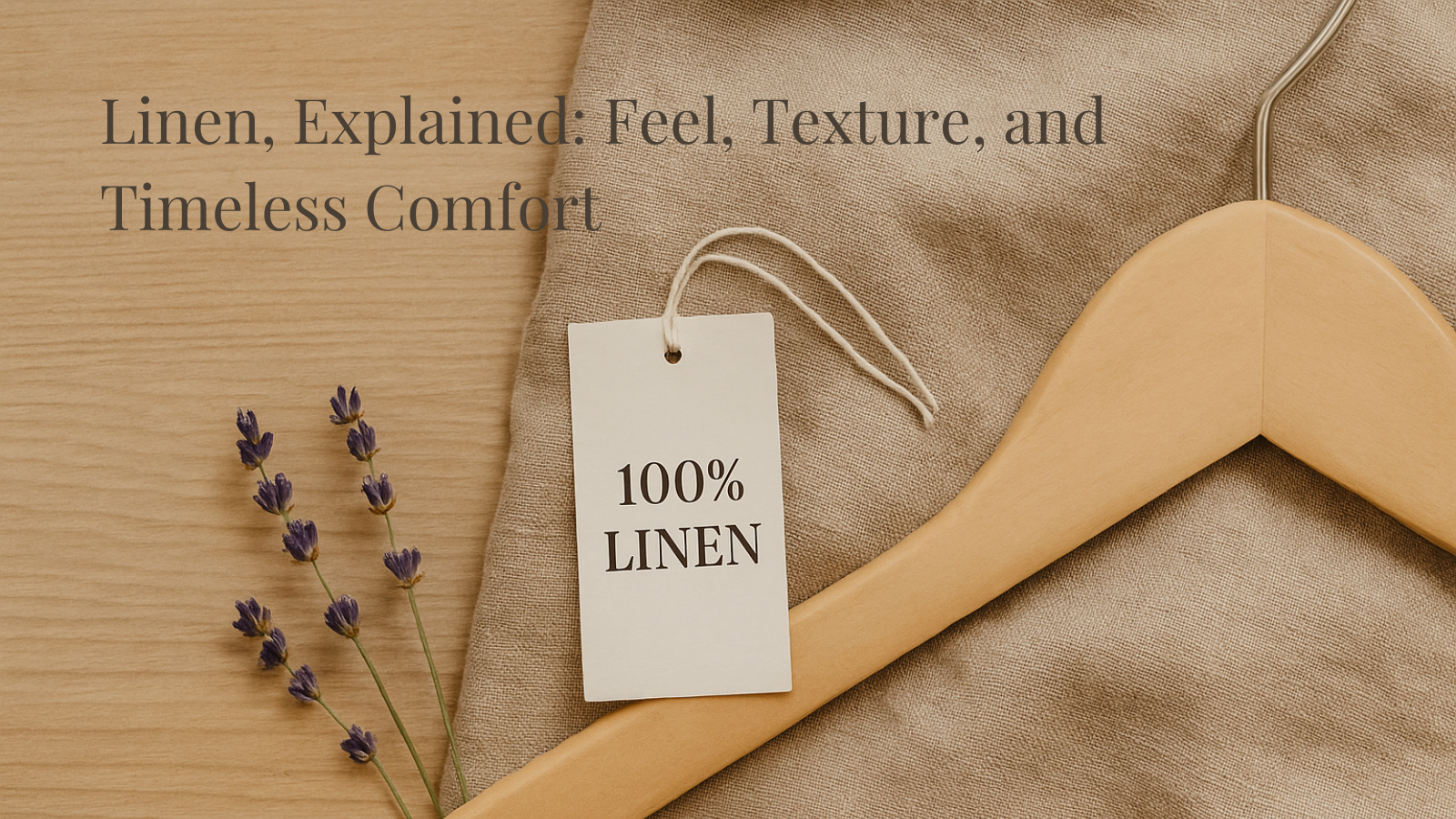
One of the reasons linen shirts are so widely adopted is comfort. They are breathable, moisture-absorbing, and well-suited for warm climates like India.
But comfort also has an indirect sustainability impact.
When clothing feels better to wear, it tends to be worn more often. And frequency of use is one of the most overlooked aspects of sustainable consumption.
A shirt that sits in your wardrobe is wasted potential. A shirt that you reach for repeatedly reduces the need to buy more. In that sense, comfort supports longevity.
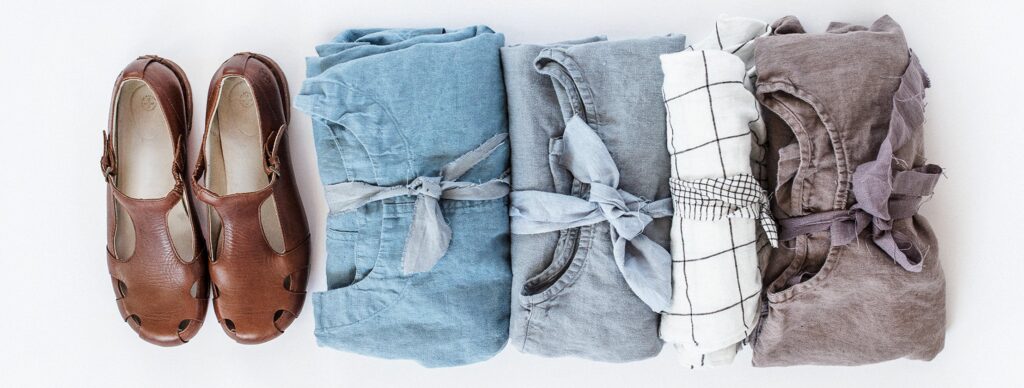
It is easy to position linen as the ideal solution, but that would be incomplete.
Processing flax into linen fabric still requires energy and resources. In many cases, production is concentrated in specific regions, meaning transportation adds to the overall footprint. Additionally, not all linen garments are made equal. Blends, chemical treatments, and fast fashion production methods can dilute the environmental benefits.
Research and industry analysis referenced by organisations like the Organisation for Economic Co-operation and Development highlight that textile supply chains remain complex, regardless of fibre type.
So while linen has advantages, it is not automatically sustainable.
It depends on how it is produced, and how it is used.
:max_bytes(150000):strip_icc()/linen-vs-cotton-5116803_06-ab1b4803779f4901bd0fdd7862e464c9.JPG)
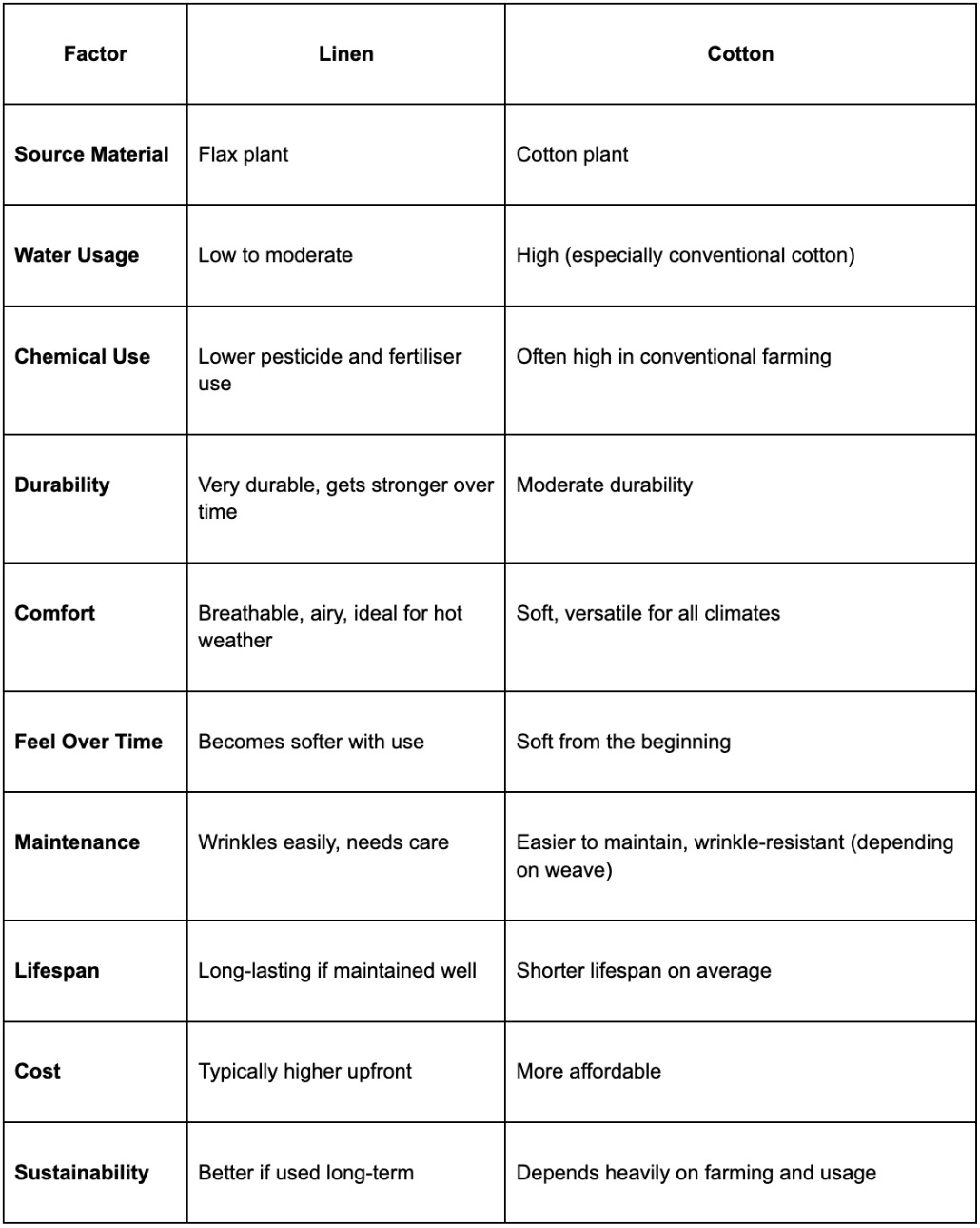
For most people, the real choice is not between linen and synthetic fabrics. It is between linen and cotton.
Cotton is familiar, widely available, and often cheaper. But it is also one of the most resource-intensive crops in the textile industry, particularly in terms of water usage.
Linen, on the other hand, typically requires less water and fewer chemical inputs during cultivation. It also tends to last longer, which reduces replacement cycles.
However, cotton has its own strengths. It is softer initially, easier to maintain, and more accessible across price points.
The decision is not about which is perfect, but which aligns better with long-term use.
:max_bytes(150000):strip_icc()/linen-vs-cotton-5116803_16-4a2aadc6743a4d6e92aa0ce91160e1bd.JPG)
Linen’s growing visibility has not gone unnoticed.
Brands like Uniqlo and H&M have introduced linen collections as part of their summer and “conscious” ranges. In India, Fabindia has long worked with natural fabrics, including linen, within its product lines.
These shifts reflect changing consumer interest.
But they also highlight an important point. When demand for a material increases, it can be absorbed into the same fast-moving systems that created the problem in the first place.
Which means material alone cannot define sustainability.

They can be.
But only under certain conditions.
A linen shirt is a better choice if it is worn frequently, maintained well, and kept in use over time. It is a better choice if it replaces multiple lower-quality purchases. It is a better choice if it is not treated as disposable.
But if it is bought impulsively, worn occasionally, and replaced quickly, the advantage disappears.
The difference lies in behaviour.

If you are choosing linen, a few factors make a meaningful difference.
Pure linen tends to retain more of the material’s natural properties compared to blends. Construction quality affects how long the garment will last. And care matters — linen responds well to proper washing and storage, extending its lifecycle significantly.
These are small details, but they determine whether the product performs as intended.

Linen shirts are not a solution on their own. But they are a step in a better direction.
They represent a shift toward materials that last longer, perform better, and align more closely with natural systems. But without a corresponding shift in how we buy, use, and value clothing, even better materials can fall into the same patterns of waste.
Sustainability, in the end, is not about replacing one fabric with another.
It is about changing the relationship we have with what we use.
:max_bytes(150000):strip_icc()/definition-of-linen-fabric-1976785-hero-81525102a02743f5bee75fa839eef33a.jpg)
The next time you consider buying a linen shirt, the question is not just whether it is sustainable.
It is whether you will use it enough to make it so.
Because the most sustainable piece of clothing is not defined at the point of purchase.
It is defined over time.
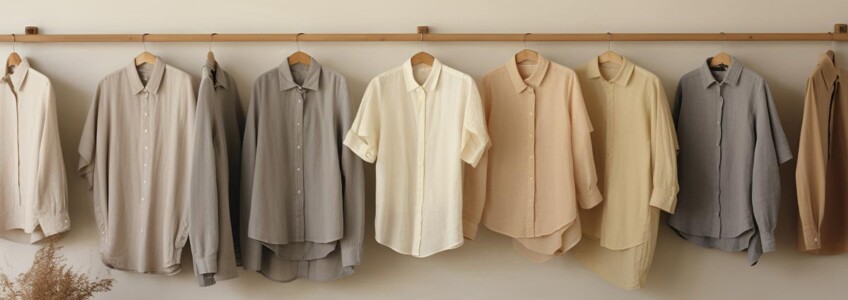
Linen shirts are considered more sustainable because they are made from flax, which typically requires less water and fewer chemicals than cotton. Their durability also helps reduce frequent replacement.

Linen generally has a lower environmental impact during cultivation, especially in terms of water and pesticide use. However, overall sustainability depends on how often the garment is used.

Linen is made from a natural fibre that is biodegradable and long-lasting. These qualities make it a better option when used over extended periods.
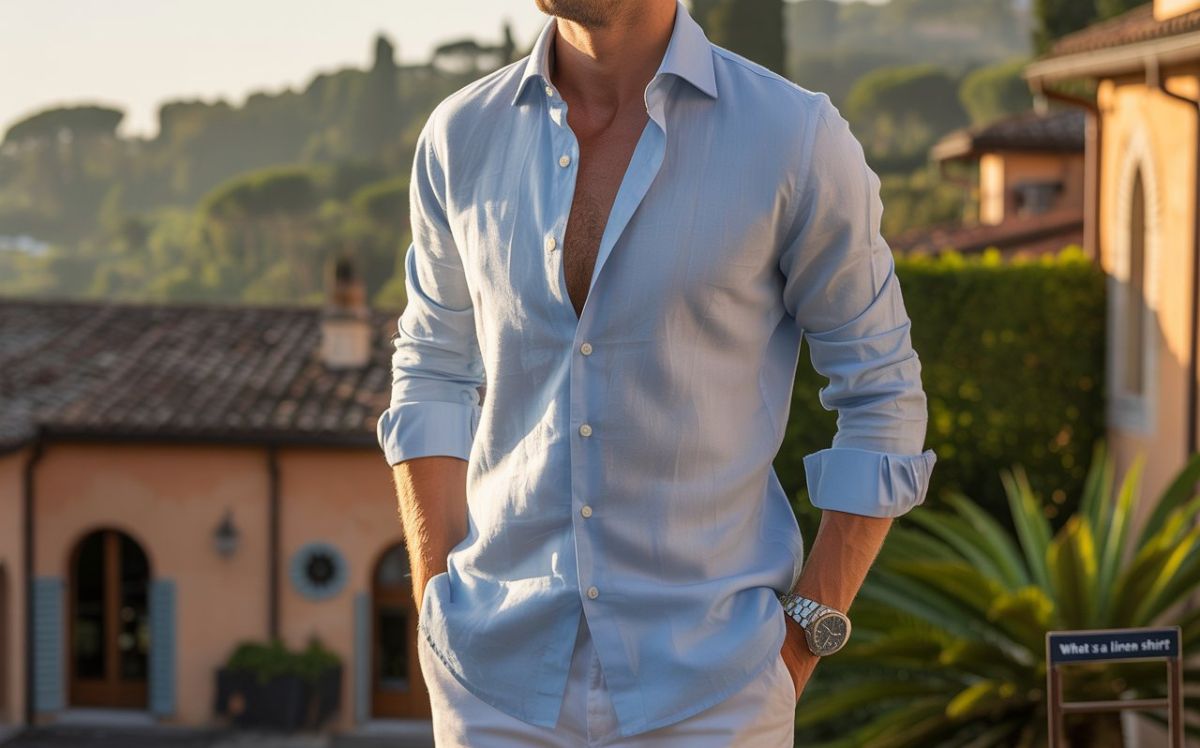
Linen shirts are highly durable and can last for several years with proper care. They often become softer and more comfortable over time.
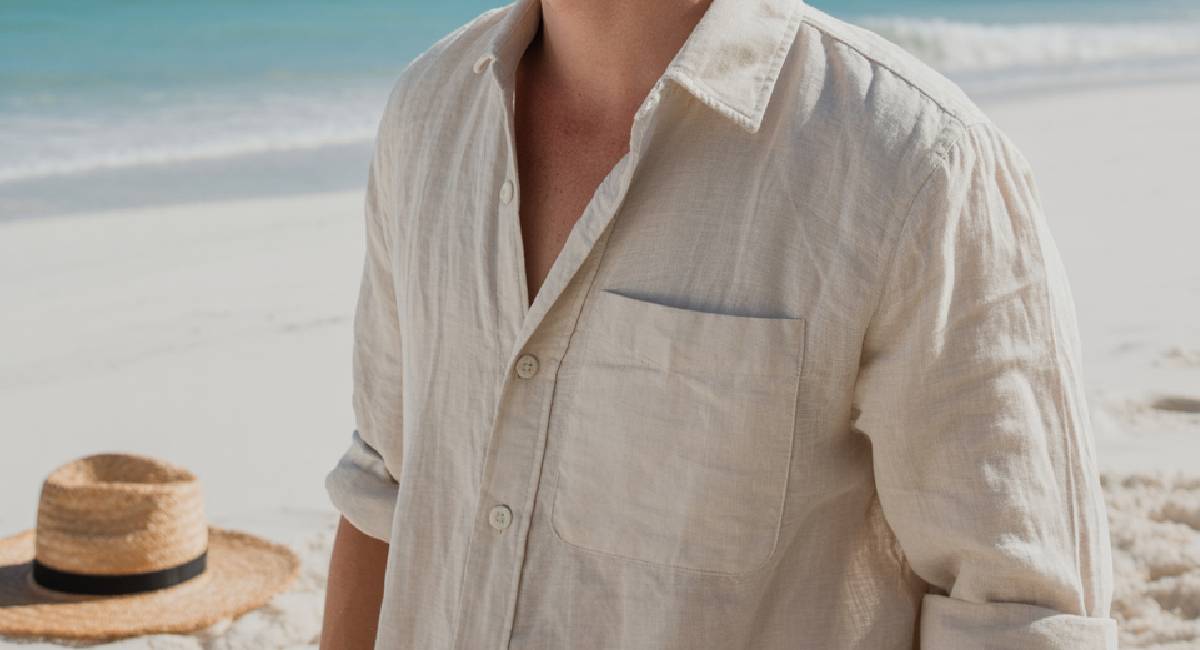
Yes, linen is highly breathable and moisture-absorbing, making it ideal for warm and humid climates like India.
:max_bytes(150000):strip_icc()/how-to-prevent-wrinkled-clothes-2147248-02-b69f568232db4f0a8ea77a17e169538a.jpg)
Linen naturally wrinkles due to its fibre structure. However, many people consider this part of its relaxed and breathable appeal.
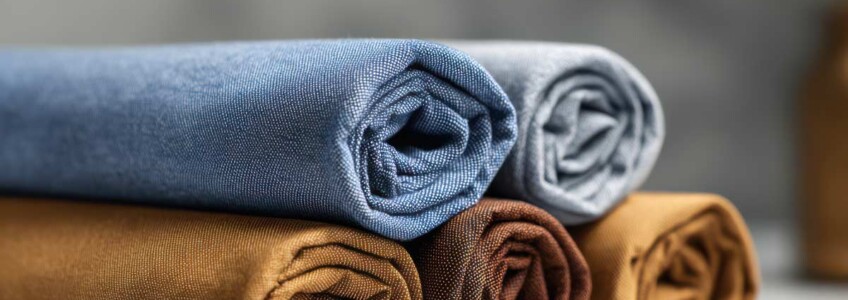
Linen blends may reduce some of the natural benefits of pure linen, depending on the materials used. Pure linen is generally the more sustainable option.

Linen production involves a longer and more complex process, and the fabric’s durability adds to its value. While the upfront cost is higher, it can last longer than cheaper alternatives.

Linen shirts should be washed gently, air-dried when possible, and stored properly. Good care helps extend their lifespan and maintain quality.

They can, but only if they are used frequently and kept for a long time. Sustainability depends more on usage patterns than just the material itself.
Related topics
Related Categories
Share this blog


