

© 2026 Made for Planet • Privacy Policy • Terms & Conditions
Platform by Mission Sustainability
By Rittika rana • Mar 18, 2026
When we think about ways to save water, the image that usually comes to mind is simple. Turning off the tap while brushing.
Taking shorter showers. Fixing leaking pipes. These actions matter, and they always will. But they only tell part of the story.
In today’s world, water is deeply embedded in everything we do. It is used to grow our food, manufacture our devices, power industries, and even sustain the digital systems we rely on every day. Much of this water remains invisible to us. We do not see it, yet we depend on it constantly.
This is where the idea of a water footprint becomes important. It helps us understand that water use is not limited to what flows from our taps. It is also hidden in the products we buy, the services we use, and the digital behaviours we barely think about.
Saving water today is no longer just about using less. It is about becoming more aware of how our everyday choices shape the demand for water across systems.
Water connects everything. It connects agriculture to food, energy to industry, and technology to daily life. Once we begin to see these connections, saving water becomes less about isolated actions and more about conscious living.
Take digital infrastructure as an example. It often feels intangible, almost weightless. But behind every email, video stream, or cloud backup sits a network of physical servers. These servers require energy to operate and cooling systems to prevent overheating. Insights from the International Energy Agency show how rapidly data centres are growing and how resource intensive they can be.
This does not mean we need to stop using technology. It simply means we need to use it more thoughtfully.
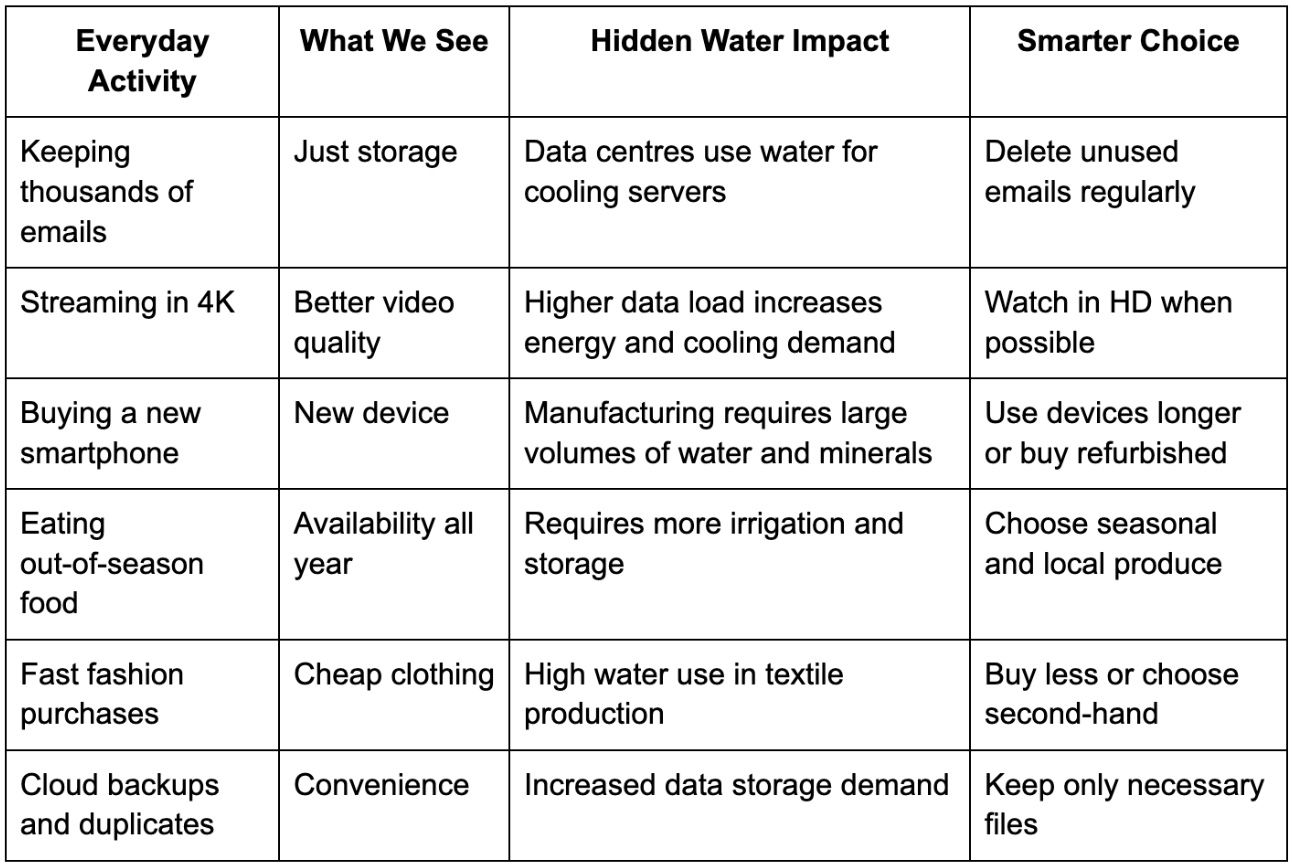

Most of us rarely think about our digital footprint beyond storage limits or device speed. But every piece of data we keep contributes to a larger system that consumes energy and resources.
Old emails, duplicate photos, forgotten downloads, and unnecessary backups all occupy space on servers that run continuously. Over time, this adds up.
Cleaning up your digital space is a small but meaningful step. Unsubscribing from mailing lists that you never read reduces the number of emails being stored and transmitted. Deleting files you no longer need reduces storage demand. Even organising your data more efficiently can make a difference.
These actions may seem minor, but they reflect a broader mindset shift. When millions of people reduce digital clutter, the cumulative reduction in resource demand becomes significant.
Streaming has become a default part of modern life. We watch shows, attend online meetings, and consume content almost constantly. What we often overlook is how the quality of what we stream affects resource use.
Higher resolution videos require more data to be transferred and processed. This increases the load on servers and networks.
Research into streaming energy consumption shows that ultra high definition formats can significantly increase energy demand compared to standard or high definition.
Choosing a slightly lower resolution when high clarity is not necessary is a simple change. Turning off autoplay prevents unnecessary streaming. Downloading only what you truly plan to watch avoids wasted data transfer.
These are small adjustments, but they align convenience with responsibility.
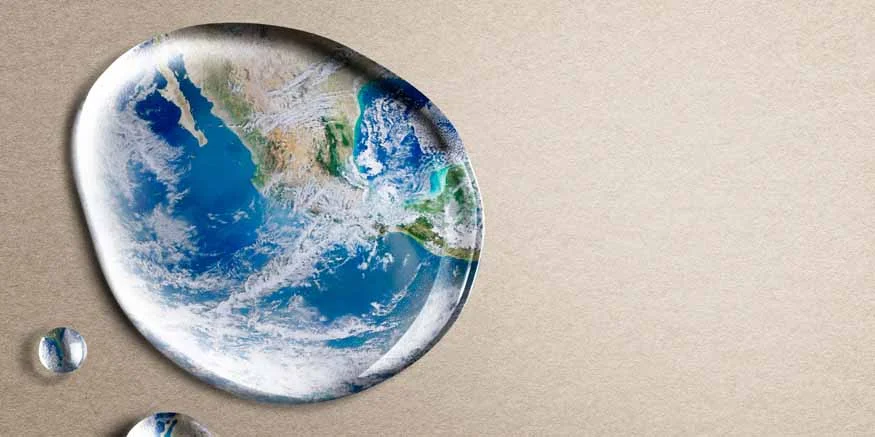
Artificial intelligence is becoming a part of everyday life. It helps us write, search, design, and make decisions. It is powerful, and its potential is still expanding.
At the same time, AI systems rely on extensive computing power. Training and running these models requires large amounts of energy. Research published in Nature Climate Change has highlighted how computational processes can carry a measurable environmental footprint.
This does not mean avoiding AI altogether. Instead, it means using it with intention. Asking better questions, avoiding repetitive prompts, and using AI where it genuinely adds value can reduce unnecessary computational demand.
Responsible use of technology is becoming just as important as access to it.

Modern consumption is often driven by upgrades. New models are released frequently, and older ones quickly feel outdated even when they function perfectly well.
What we rarely see is the environmental cost behind manufacturing these products. Extracting raw materials, processing them, assembling components, and transporting finished goods all require significant resources, including water.
The United Nations Environment Programme has repeatedly highlighted how resource extraction and production are among the largest contributors to environmental pressure.
Using devices for longer periods is one of the most effective ways to reduce this demand. Repairing instead of replacing, protecting devices from damage, and delaying upgrades when possible can extend product lifecycles.
This is not about giving up convenience. It is about recognising value beyond novelty.

There is a quiet shift happening in how people think about ownership. More individuals are beginning to recognise that not everything needs to be new.
Second hand products offer a practical alternative. They extend the life of existing items and reduce the need for additional manufacturing. This directly lowers the demand for raw materials and water.
The principles of a circular economy, explained by the Ellen MacArthur Foundation, highlight how reuse and regeneration can transform the way we consume.
Choosing refurbished electronics, pre owned furniture, or thrifted clothing is no longer just about saving money. It is about participating in a more sustainable system.

Water is most heavily used in agriculture. What we eat has a direct connection to how water is consumed at scale.
According to the Food and Agriculture Organization (FAO), agriculture accounts for a significant share of global freshwater withdrawals. This makes food choices one of the most powerful ways individuals can influence water use.
Eating seasonal produce reduces the need for intensive irrigation, storage, and long distance transportation. Local food systems are often more aligned with natural water cycles.
This does not require drastic dietary changes. Even small shifts towards seasonal and locally available foods can make a meaningful difference over time.

Modern life is filled with constant prompts to buy. Notifications, emails, advertisements, and limited time offers create a sense of urgency that often leads to unnecessary purchases.
Every product we buy carries a resource footprint. From production to packaging, water is used at every stage.
Reducing these triggers can help us make more intentional choices. Unsubscribing from promotional emails, taking time before making purchases, and focusing on actual needs rather than impulses can significantly reduce consumption.
Less consumption does not mean compromise. It means clarity.

Saving water today is not just about conservation in the traditional sense. It is about understanding the systems we are part of.
Our digital habits, consumption patterns, food choices, and use of technology all influence how resources are used. Each decision we make either increases or reduces demand.
What makes this powerful is scale. One person deleting unused files may not seem impactful. But millions of people doing the same creates measurable change.
Sustainability is not about perfection. It is about awareness followed by consistent action.

The most meaningful way to save water in the modern world is not limited to what we do with a tap. It is reflected in how we live, what we consume, and how we use technology.
When we begin to see water as part of a larger system rather than an isolated resource, our choices naturally become more thoughtful.
And when small, thoughtful choices are repeated across millions of lives, they create something far greater than individual impact. They create change.
Simple habits like fixing leaks, using water-efficient fixtures, and reducing unnecessary consumption can significantly save water. Modern approaches also include reducing digital and consumption-related water footprints.
Saving water reduces pressure on freshwater sources, lowers energy use in water treatment, and helps maintain ecosystems that depend on stable water availability.
A water footprint refers to the total amount of water used directly and indirectly in daily activities, including food, products, and digital services.
Yes, digital activities like cloud storage, streaming, and data processing rely on data centres that consume water for cooling and operations.
Yes, higher video quality requires more data transfer and processing, which increases energy and resource use in digital infrastructure.
Second-hand products reduce the need for new manufacturing, which in turn lowers water usage in production processes.
Seasonal food typically requires less irrigation, storage, and transportation, reducing the overall water and energy footprint.
Manufacturing electronics requires significant water and resources. Extending the life of devices reduces the demand for new production.
Yes, every product has a water footprint. Buying less reduces demand for manufacturing, packaging, and resource extraction.
Modern water-saving methods include reducing digital clutter, using technology responsibly, choosing sustainable products, and adopting mindful consumption habits.
Related topics
Related Categories
Share this blog


