
Diwali 2026: How to Celebrate Local & Support Small Indian Brands
By Bhumeshwari Dangar • Oct 28, 2026

Diwali has always had a local side to it.
The diyas from the neighbourhood potter, sweets from a favourite mithai shop, flowers from the morning market, a blouse altered by the local tailor and gifts picked up from small shops nearby have long been part of how families prepare for the festival.
But festive shopping has changed. Today, almost everything needed for Diwali can arrive at the door within hours, from decorations and sweets to clothes, candles and complete gift hampers.
Convenience is useful, but Diwali is also a good opportunity to look a little closer to home.
Recent festive shopping research in India has shown that conscious shoppers are increasingly interested in local, handmade and small-business products. That makes Diwali a natural moment to think not only about what we buy, but also about who made it, where it came from and whether it will still be useful after the festival.
Celebrating local does not mean everything you buy has to be handmade, nor does it automatically make every local product sustainable. It simply means giving more consideration to craft, usefulness, durability and the businesses behind the products we bring home.
Here are some simple ways to bring that idea into Diwali 2026.
1. Start With the Local Potter
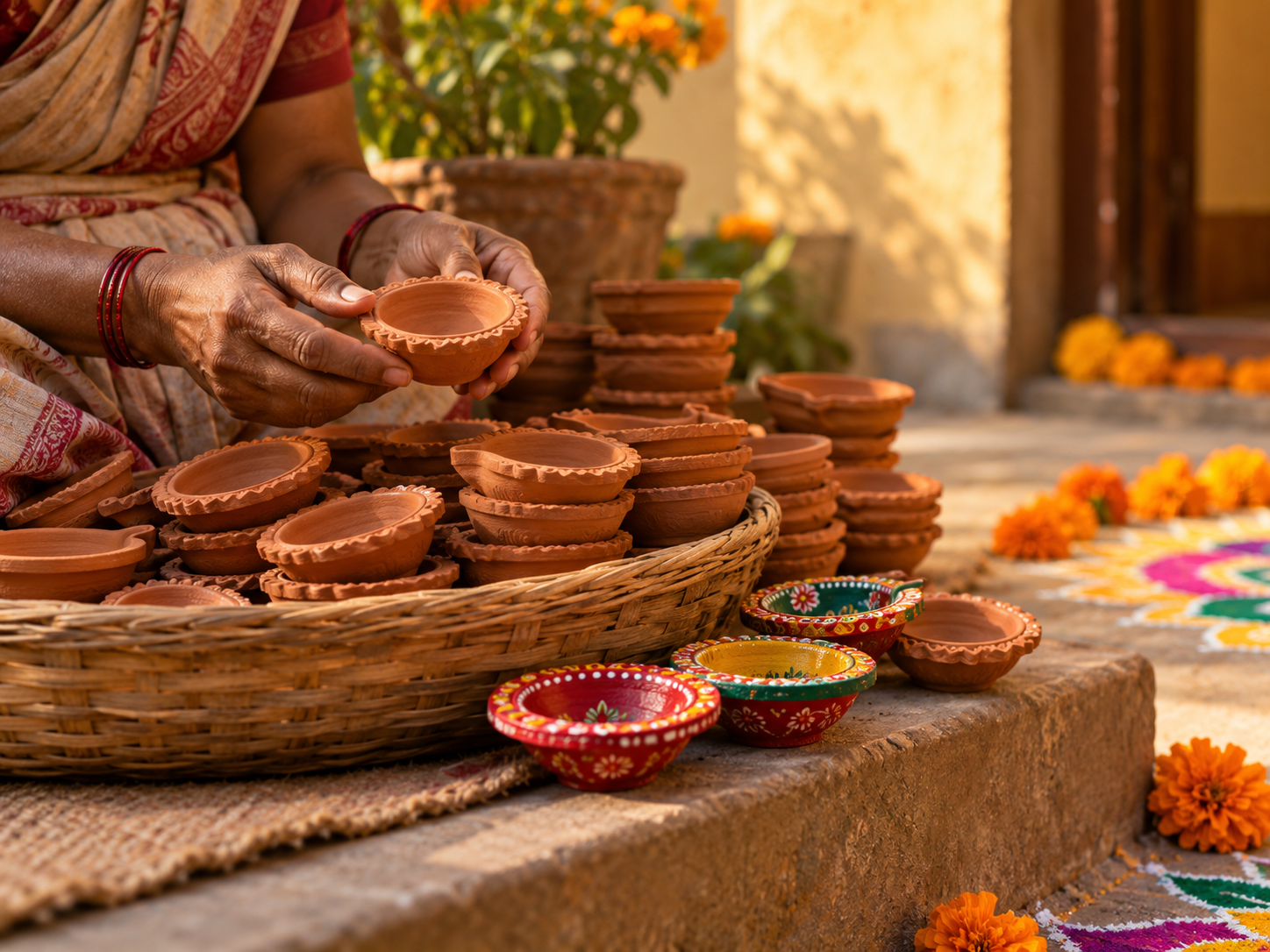
Few things represent Diwali as simply as an earthen diya.
Before ordering boxes of decorative lights online, check whether potters in your neighbourhood or a nearby market are selling traditional diyas. Plain terracotta versions can be beautiful on their own, while painted varieties add colour around entrances, balconies and rangoli.
India has an extraordinary range of handicraft traditions, and the government's Development Commissioner for Handicrafts portal is a useful place to explore artisan-made products and craft traditions from different parts of the country.
If finding a local potter is difficult, there are also Indian brands working with handmade materials and traditional techniques. ellementry offers handcrafted homeware, while CraftLipi works with village artisans across handmade décor, lighting, utilities and gifts.
Our guide to Sustainable Diwali Decorations 2026 also includes more ideas for reusable festive décor.
Whichever route you take, choose pieces you genuinely like enough to use again rather than buying large quantities simply because they are inexpensive.
2. Look Beyond Plastic Torans and Mass-Produced Decorations
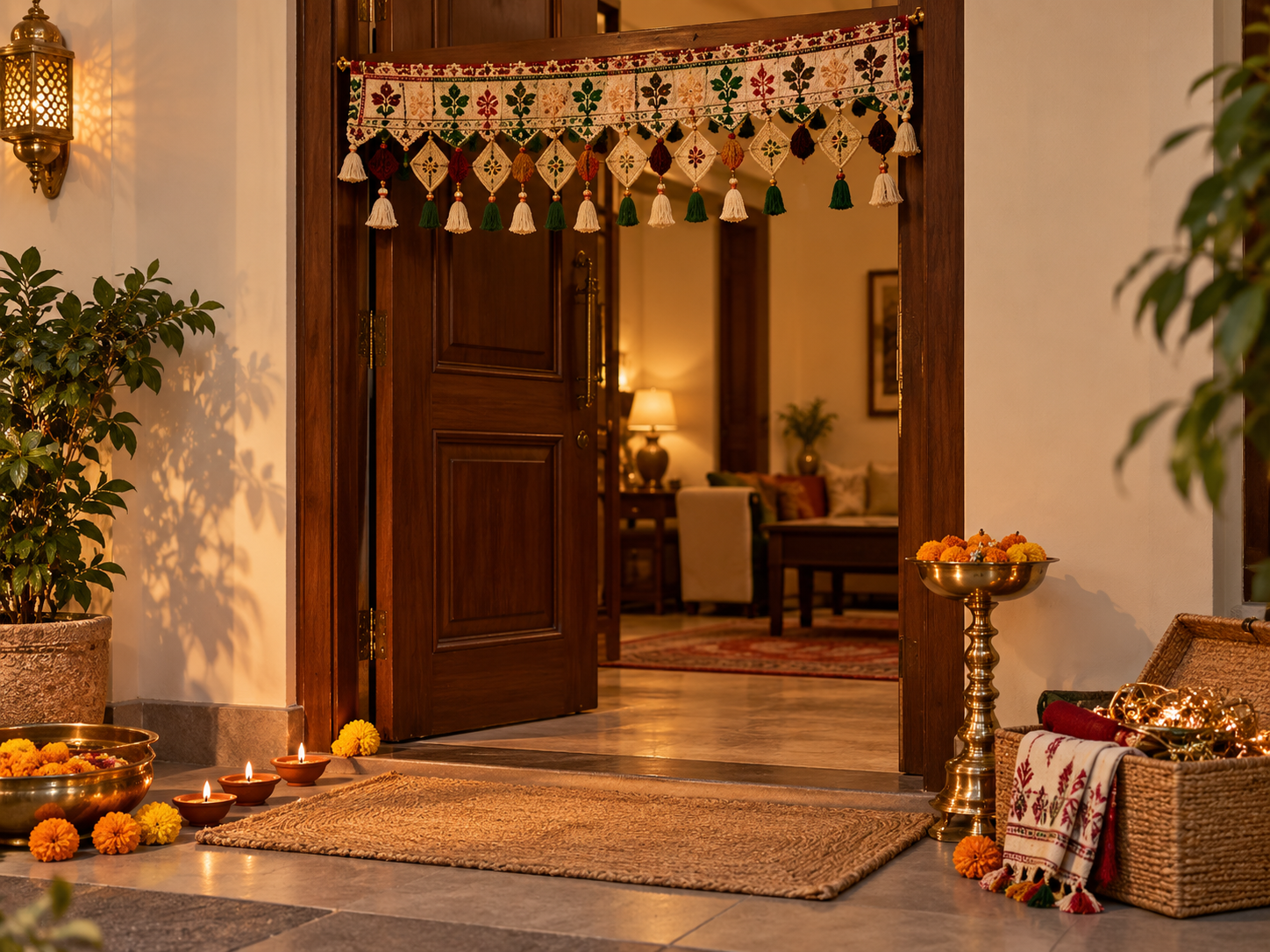
A doorway does not need much to feel festive. A toran, a few diyas and fresh flowers can often do more than a collection of plastic decorations covering every wall.
This is also a good place to discover Indian craft.
Okhai works with artisan communities and Indian craft traditions across fashion, accessories and home products. iTokri brings together Indian fabrics, handicrafts and artisan-made products from across the country, while Gaatha focuses on craft-led products connected to traditional making.
These kinds of products are interesting not simply because they look “eco-friendly”, but because they bring materials, techniques and regional craft into the celebration.
Rather than filling the house with decorations designed only for one week, look for pieces that can return each Diwali or find another use during the year.
And before buying anything new, open the box containing last year's decorations. Existing lights, brass pieces, runners and torans should come first.
3. Let Indian Craft Become Part of Everyday Décor
One of the best ways to support craft is to stop treating it as something that appears only during festivals.
A woven basket can hold fruit after Diwali. A ceramic bowl can become everyday serveware. A bamboo lamp can stay in the living room. A brass urli can hold flowers throughout the year.
This is where a handcrafted purchase starts to make much more sense.
Instead of searching only for “Diwali décor”, explore ceramics, woven fibres, metalwork, textiles, woodcraft and other home products that happen to work beautifully during Diwali too.
A handcrafted lamp, platter or basket does not need “Happy Diwali” printed across it to belong in a festive setting.
That small shift can help a seasonal purchase stay relevant long after the celebration is over.
4. Buy Your Diwali Flowers From the Market Around You
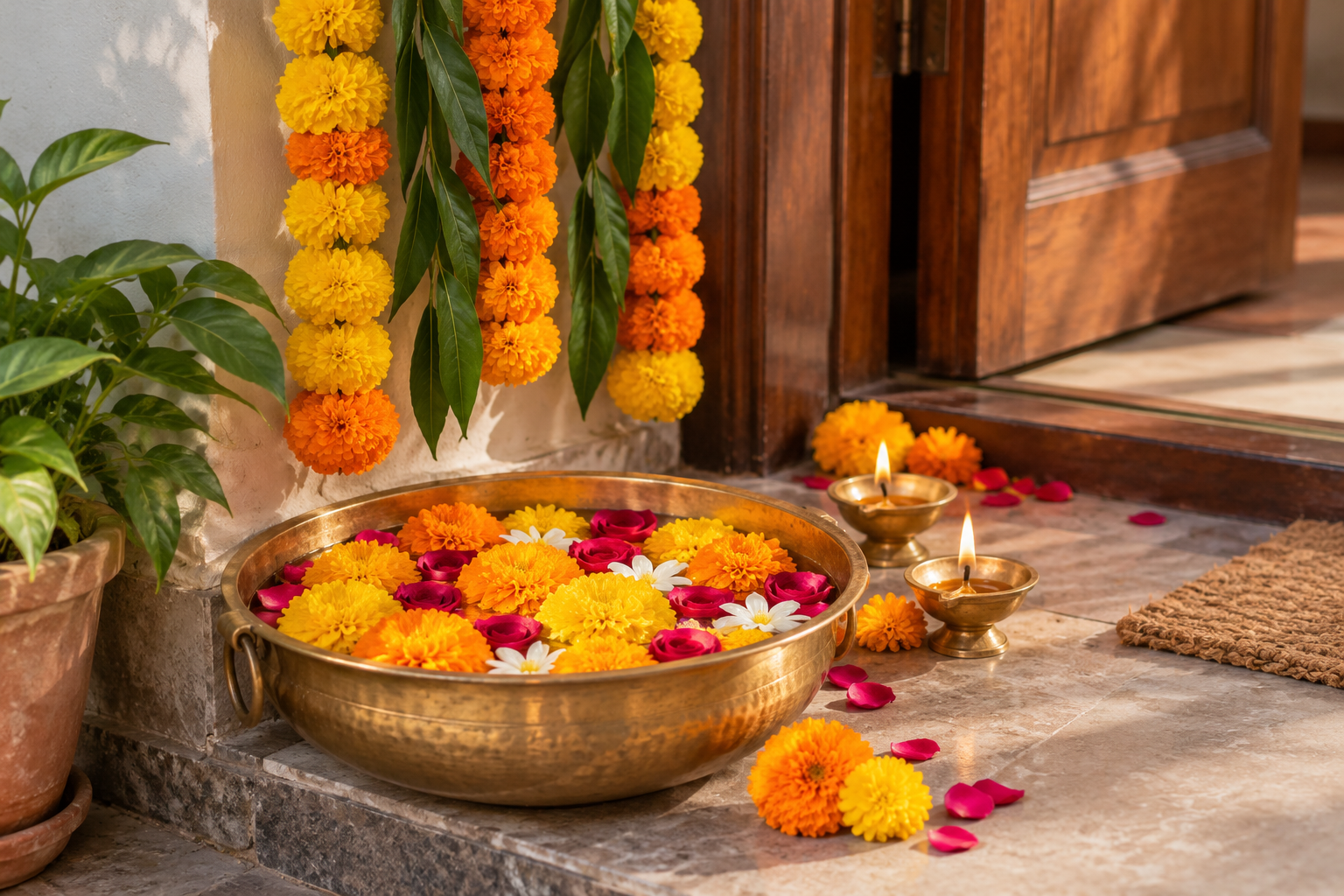
Marigolds, roses and leaves are some of the simplest ways to decorate for Diwali.
Buying them from a neighbourhood flower seller or local market keeps the arrangement uncomplicated. Use garlands around the entrance, loose petals around diyas or one bowl of flowers as a table centrepiece rather than creating elaborate installations throughout the house.
You can also combine fresh flowers with things you already own: brass bowls, glass jars, candle holders or traditional diyas.
After Diwali, remove plastic thread, staples, tape and synthetic embellishments before separating suitable floral material for composting or wet-waste collection.
Local does not have to mean buying more. Sometimes it simply means making better use of simple things available nearby.
5. Choose Sweets From a Local Maker
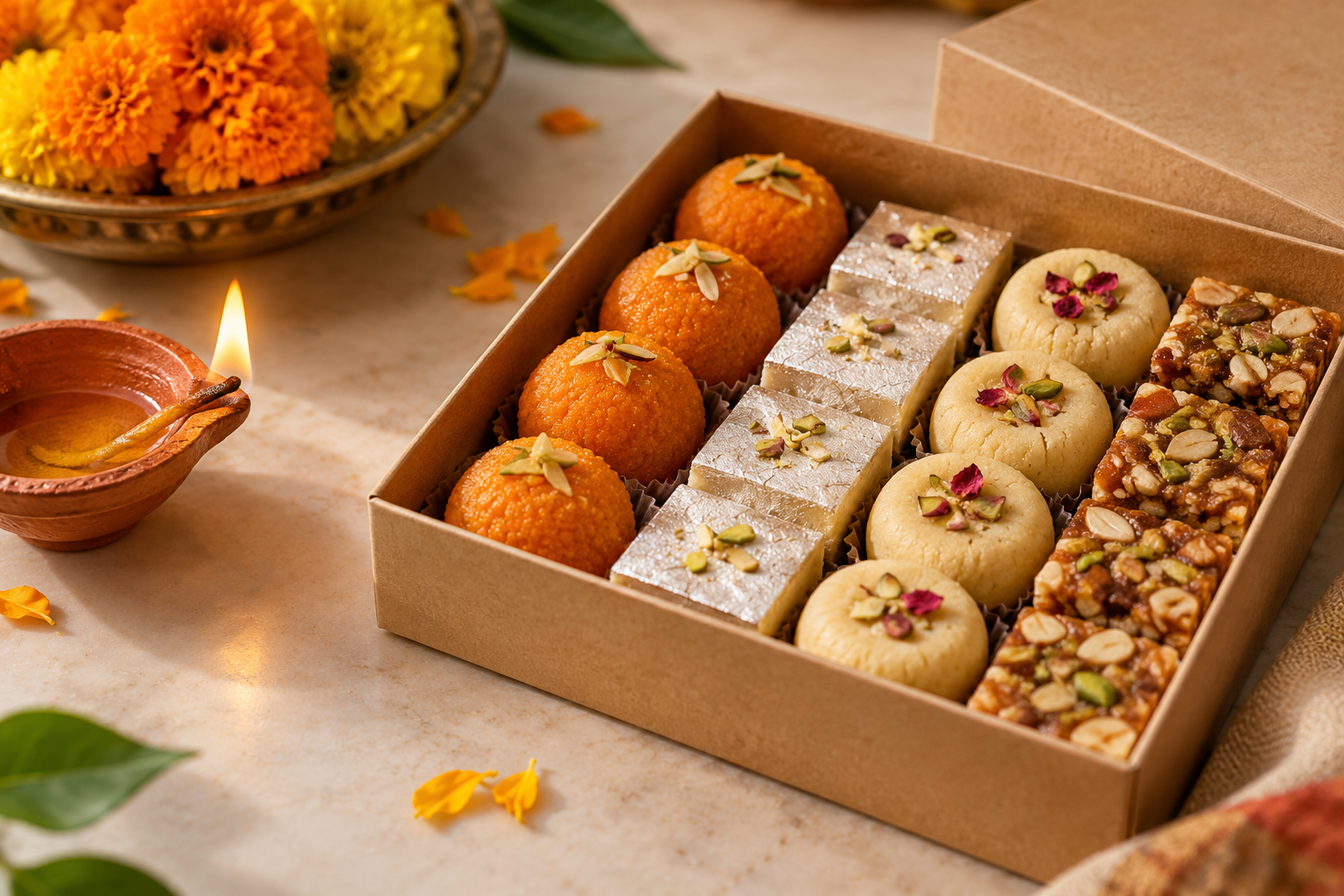
Diwali gifting often begins with food, and this may be one of the easiest categories to keep local.
Instead of automatically choosing a large branded hamper, consider sweets from a trusted neighbourhood mithai shop, chocolates from an independent maker, locally roasted nuts or regional snacks that reflect where you live.
This can make gifting more personal too. A box containing one excellent local speciality can be more memorable than an oversized hamper containing ten unrelated products.
Packaging still matters. Ask whether the shop has a simpler box, whether sweets can be packed together rather than individually wrapped, or whether you can skip an additional decorative bag when it is not needed.
For more gifting inspiration, explore our guide to Eco-Friendly Diwali Gifts.
6. Discover Small Indian Brands Instead of Another Generic Hamper
Diwali can also be an opportunity to discover Indian businesses doing something genuinely different.
Phool works with discarded temple flowers and turns them into products such as incense and festive gifting items.
Scrapshala works with pre-existing materials and Indian craft techniques to create home, lifestyle and gifting products.
Clan Earth focuses on lifestyle products and gifting with alternative materials and reuse-oriented design.
The point is not that every Diwali gift needs to carry a sustainability label. It is that festive gifting can become an opportunity to discover smaller businesses instead of automatically returning to the same mass-produced options every year.
You can also browse more Indian and global brands through the Made for Planet product directory.
7. Rewear Indian Fashion — and Use Your Local Tailor
Celebrating local can also happen without buying anything new.
Before shopping for another festive outfit, look through what you already own. A saree can feel completely different with another blouse. An older kurta can be altered for a better fit. A dupatta can transform a simple outfit.
A local tailor, embroiderer or alteration shop can sometimes give an existing garment another life for far less than the cost of replacing it.
If you do want something new, explore artisan-led labels and handloom or craft-based pieces rather than treating festive fashion as something disposable.
Buying one piece you genuinely love and can wear to weddings, dinners and future celebrations may make more sense than building an entirely new Diwali outfit every year.
8. Bring Local Craft to the Diwali Table
The dining table is another place where local craftsmanship fits naturally.
Instead of buying festive-themed disposable serveware, bring out the steel, glass and ceramic pieces already at home. If something is genuinely missing, look at locally made ceramics, wooden platters, woven table accessories or handcrafted serving bowls.
For more table and hosting inspiration, our Sustainable Diwali Party Ideas 2026 guide explores reusable serveware, table linen, food, drinks and low-waste hosting.
The advantage of good serveware is simple: it works just as well for Sunday lunch as it does for Diwali dinner.
That makes it a much better purchase than something bought only because it carries a festive motif.
9. Explore Craft Markets, Exhibitions and Artisan Platforms
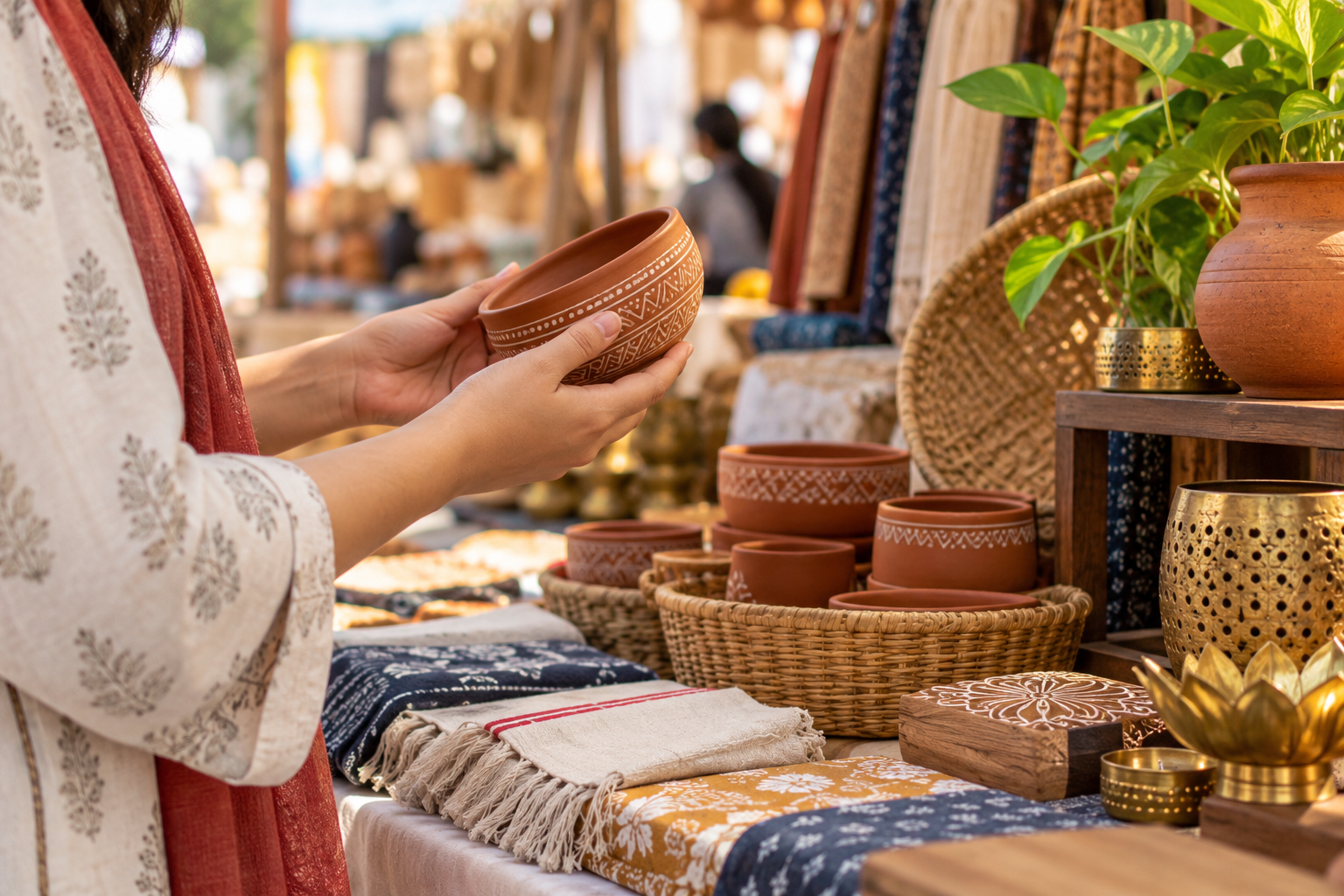
Shopping local does not necessarily mean knowing an artisan personally.
Craft exhibitions, neighbourhood markets, state emporiums, artisan collectives and independent stores can all provide opportunities to discover products with clearer connections to their makers.
Government craft platforms, artisan-led marketplaces and independent retailers can also help you discover products beyond the brands you already know.
The internet does not necessarily have to move spending away from small businesses. Used thoughtfully, it can help us discover them.
Before making a festive purchase, try searching by craft or material rather than only by occasion. Searching for terracotta, handloom, bamboo, block print, brass or handmade ceramics may lead to more interesting products than simply searching for “Diwali décor”.
10. Remember That “Local” Is Not Automatically Sustainable
This distinction matters.
Something made nearby can still use poor-quality materials, excessive plastic packaging or be designed to last only a few days. A handmade product can still become waste if you do not actually need it.
So do not replace one shopping label with another.
Ask simpler questions instead.
Will I use this again? Is it well made? Can it be repaired or stored? Do I know something about where it came from? Does buying it support a useful skill or business? Could I use something I already own instead?
Those questions tell you much more than a “local”, “natural” or “eco-friendly” tag ever could.
Make Diwali Feel Closer to Home
Celebrating local is not about turning Diwali into another shopping challenge.
It is almost the opposite.
Buy diyas from the potter around the corner. Order sweets from the shop your family already loves. Bring out your grandmother's brass lamp. Ask your tailor to alter an older kurta. Discover a small Indian brand making something genuinely interesting. Choose one handcrafted piece instead of several disposable decorations.
These choices may seem small, but together they make the festival feel more connected to the people, places and traditions around us.
And that may be one of the nicest things about celebrating locally: what you bring home comes with a little more of a story.
This Diwali, before searching farther away, see what is being made closer to home.
Explore more Diwali ideas, product discoveries and sustainable living stories on Made for Planet.
FAQs
What does celebrating Diwali locally mean?
Celebrating locally can mean buying from neighbourhood businesses, artisans, local food makers and small Indian brands while also reusing things you already own.
What can I buy locally for Diwali?
Terracotta diyas, flowers, sweets, snacks, clothing, handmade decorations, ceramics, baskets, candles and gifts are all categories where local options may be available.
Why should I buy handmade products for Diwali?
Handmade products can support craft skills and artisan livelihoods while offering distinctive materials and techniques. Their sustainability still depends on factors such as durability, materials, packaging and how much they are used.
Where can I find Indian artisans and handicrafts online?
Government handicraft platforms, artisan marketplaces and independent craft retailers are good places to start. You can also browse products through the Made for Planet directory.
What are some Indian brands to explore for Diwali?
Brands such as Phool, Scrapshala, Clan Earth, Okhai, CraftLipi, ellementry, iTokri and Gaatha offer products across gifting, craft, home décor, fashion and lifestyle.
Is buying local always more sustainable?
Distance alone does not determine sustainability. Materials, production methods, durability, packaging, transport and how long the product is used all matter.
How can I support local businesses without buying more?
Use repair and alteration services, buy food from neighbourhood businesses, reuse existing festive items and choose local services rather than purchasing unnecessary new products.
How can I make Diwali décor more local?
Start with terracotta diyas, flowers, handmade torans, woven bamboo, ceramics and traditional metalwork while continuing to reuse decorations you already own.
Get AI-Powered Recommendations

Share this blog


