
Diwali & E-Waste: What to Do With Old Lights, Batteries and Electronics
By Ketul Patel • Oct 28, 2026

Diwali cleaning has a habit of uncovering things we forgot we owned.
A string of fairy lights that stopped working last year. Loose batteries in a drawer. Chargers that no longer fit any device in the house. An old phone was replaced during a festive sale. Perhaps a speaker, mixer, power bank or laptop that has been sitting unused for months.
Clearing these things out can feel satisfying, but electronic products should not simply move from the cupboard to the household bin.
India's E-Waste (Management) Rules, 2022 cover a wide range of electrical and electronic equipment and encourage recycling through registered recyclers as well as refurbishment to keep products in use for longer. The rules have been in force since April 2023.
So while you are cleaning for Diwali, this is also a good time to decide which electronics can still be repaired, which can find another owner and which genuinely need to enter an e-waste collection system.
Start With the Diwali Lights
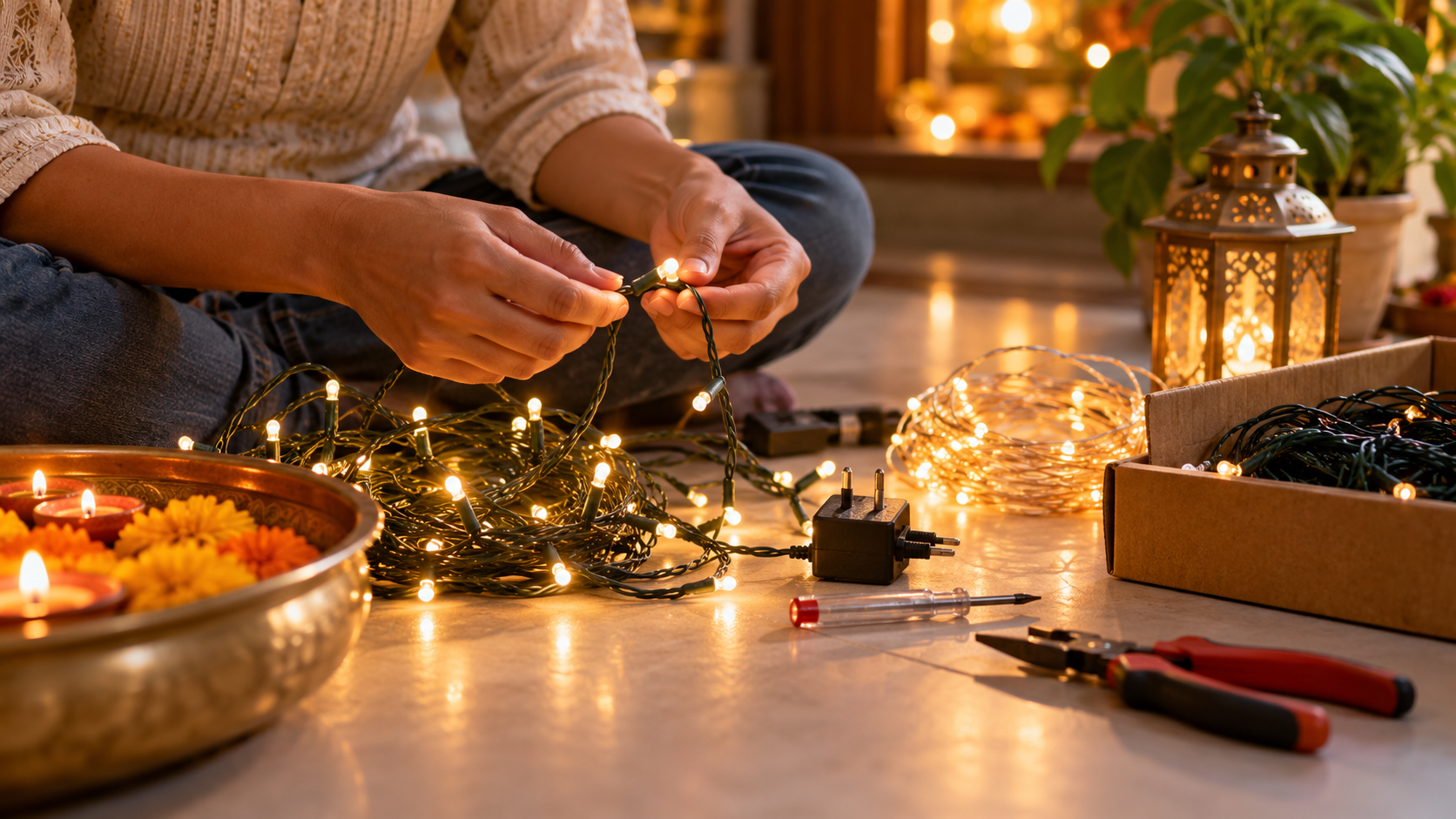
Before buying another set of festive lights, take out the ones you already own and test them.
A failed string does not always mean the entire product needs to be discarded. Sometimes the problem is a damaged plug, adapter, connection or replaceable component. If the lights can be repaired safely, keeping them for another Diwali is usually the simplest option.
If they are genuinely beyond repair, keep them separate from the flowers, food waste, cardboard and other material generated during the festival.
The same applies to decorative electronic lamps, small LED products and damaged adapters. Electrical items contain materials that require different handling from ordinary household waste. The Central Pollution Control Board's e-waste guidance notes that e-waste contains recoverable materials such as copper, aluminium and precious metals, but may also contain hazardous substances that require controlled processing.
The better sequence is simple: use it longer if you can, repair it if practical, and recycle it properly when it really reaches the end.
Keep Used Batteries Out of the Household Bin
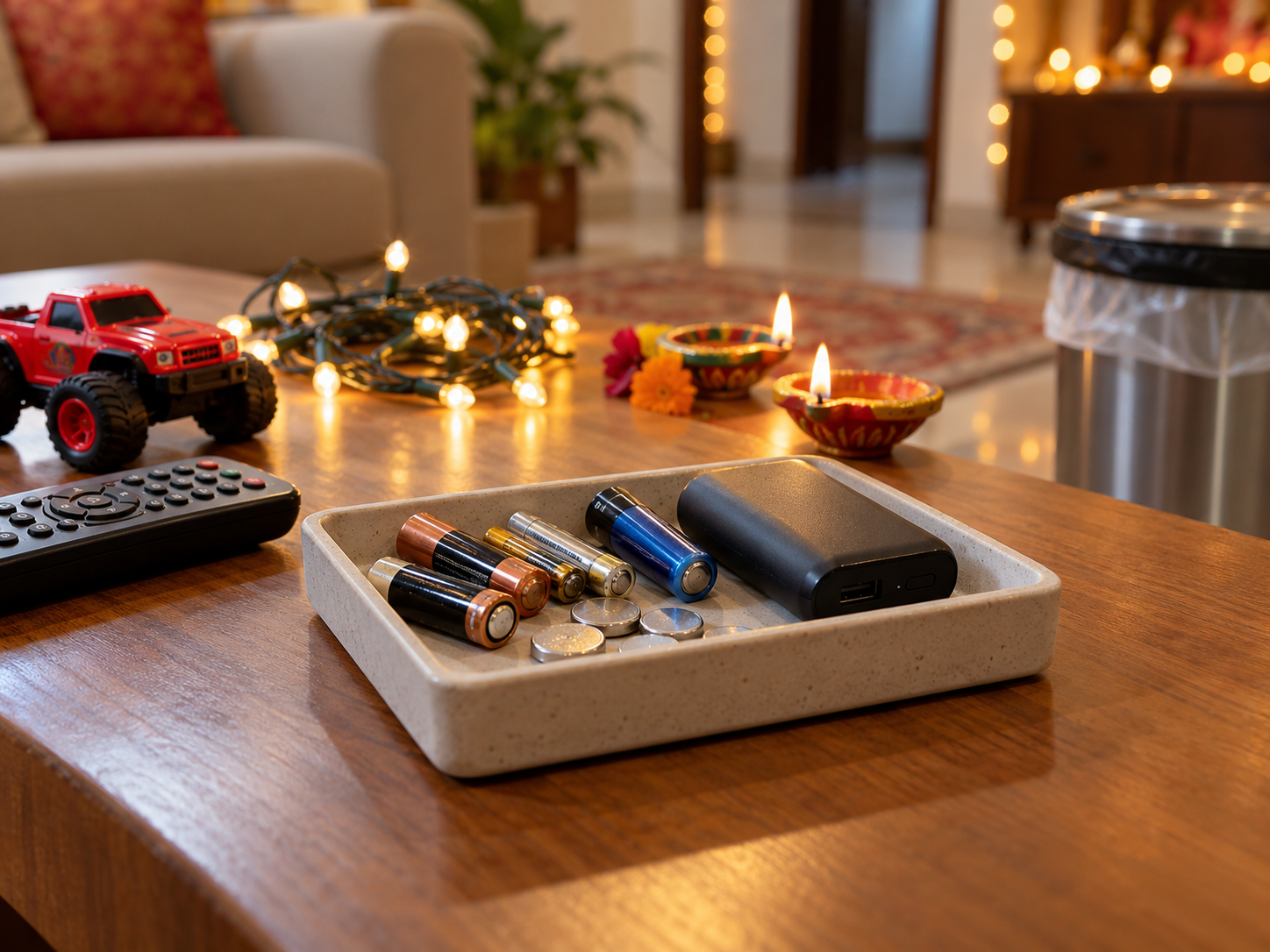
Batteries deserve separate attention because they are not treated under the same rules as general e-waste.
Under India's Battery Waste Management Rules, 2022, consumers are responsible for keeping waste batteries separate from mixed household waste and passing them to an appropriate collection, refurbishment or recycling channel.
That includes the batteries you may find in remotes, toys, decorative lights and other devices during Diwali cleaning.
Rather than keeping loose dead batteries in several drawers, collect them together in a safe place until you can use a suitable take-back or recycling route. Rechargeable batteries and damaged power banks also need more careful handling than ordinary dry household waste.
This is a small habit, but an important one because batteries are easy to throw away simply because of their size.
Decide Whether an Old Device Is Actually Waste
Finding an old phone or laptop does not automatically mean it needs recycling.
Ask whether it still works.
A phone with a weak battery may only need a battery replacement. A laptop that feels slow may still be useful for simpler tasks after servicing. A speaker with a damaged cable may be repairable. And a device that is no longer useful to you may still be useful to someone else.
This matters especially during Diwali sales, when attractive exchange offers and discounts can make electronics feel outdated before they have actually reached the end of their useful life.
If you replace something that still works, consider selling it, passing it to someone who can use it, trading it in or having it refurbished before thinking about recycling.
Made for Planet already explores this broader idea in its guide to E-Waste Management in India, which covers repair, refurbishment, recycling and India's e-waste system in more detail.
Extending the life of an existing device can often be more useful than immediately breaking it down for materials.
Clear the Cable and Charger Drawer Properly
Almost every home has a collection of cables that nobody wants to throw away because somebody might need them one day.
Diwali cleaning is a good excuse to finally sort them.
First identify cables and adapters that belong to devices you still own. Keep those together. Test uncertain ones and discard damaged cables from regular use rather than risking an electrical problem.
Then collect chargers, earphones, adapters and cables that are genuinely obsolete or damaged.
Do not burn wires or dismantle electronic products at home to recover metal. Informal burning and unsafe dismantling can expose people and the environment to hazardous substances. CPCB specifically highlights the risks associated with improper handling and recovery of e-waste.
Instead, keep these smaller items together until you can take them to an appropriate electronics collection point or recycler.
Having one small box at home labelled e-waste can make this much easier. Dead cables, chargers and small electronic accessories can go there rather than disappearing into different household bins.
Keep batteries in a separate container.
Know Where the Electronics Are Going
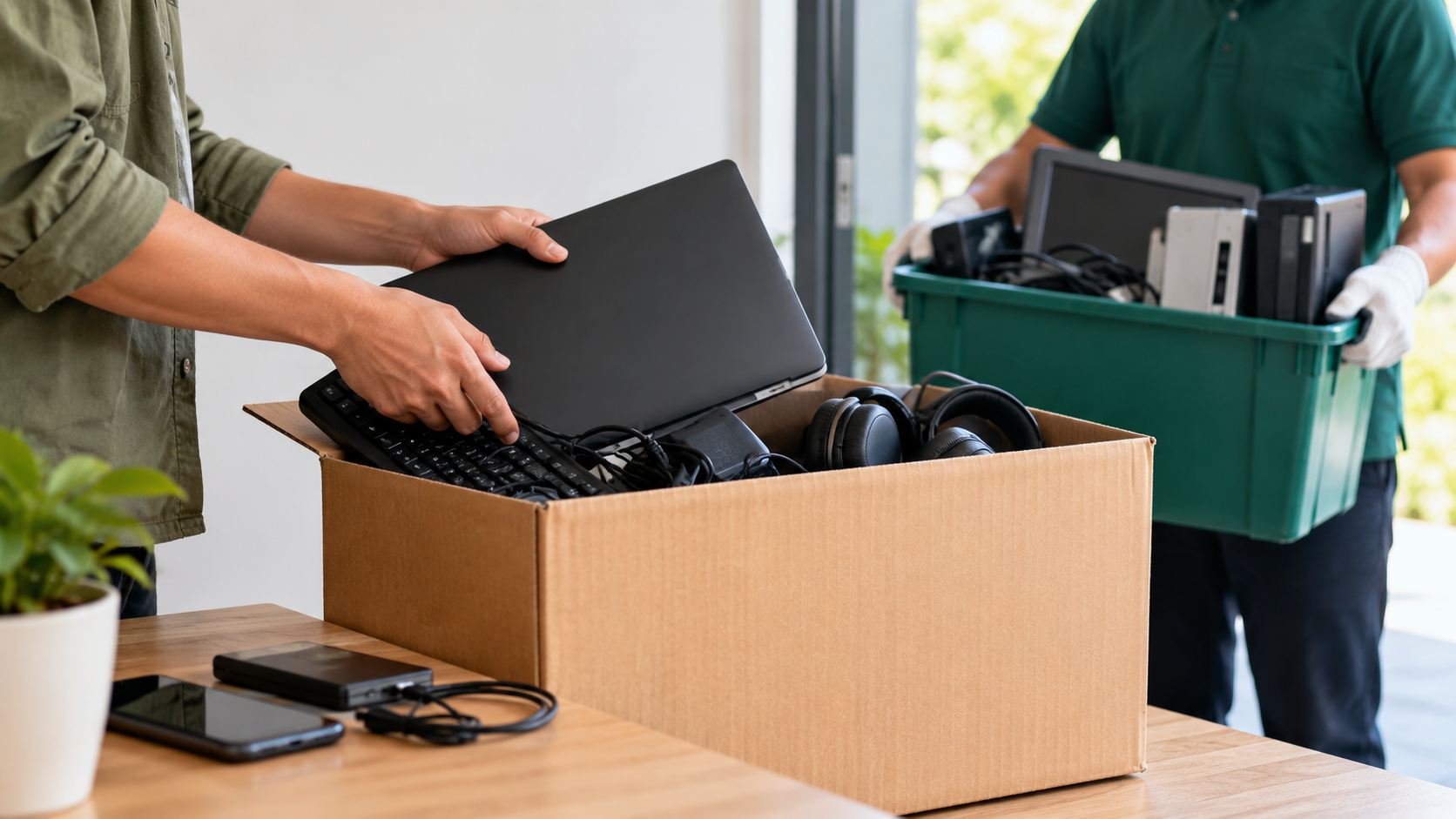
The most important part comes after you have sorted everything.
Do not hand electronics over blindly simply because someone says they collect scrap. India's e-waste framework is built around registered recyclers and environmentally sound recycling, so it is worth checking who is actually handling the material.
The Made for Planet e-waste management directory currently brings together organisations across India involved in electronic-waste collection, recycling, refurbishment and related services. It includes organisations such as Rashi E-Waste, Namo E-Waste, EcoReco, Recykal and others operating in different regions.
For example, Earth E-Waste Management in Surat works across electronic-waste collection, reuse, recovery and recycling. Always check the provider's current service area, accepted materials and relevant registrations before arranging a pickup or drop-off.
Manufacturers and electronics retailers may also provide take-back or exchange programmes, so the company that sold the product is another good place to check.
And if you are disposing of a phone, computer or storage device, remember one additional step: your data.
Back up anything you want to keep, sign out of your accounts and properly erase personal information before a device is sold, donated, refurbished or recycled.
Make E-Waste Part of the Diwali Clean-Out
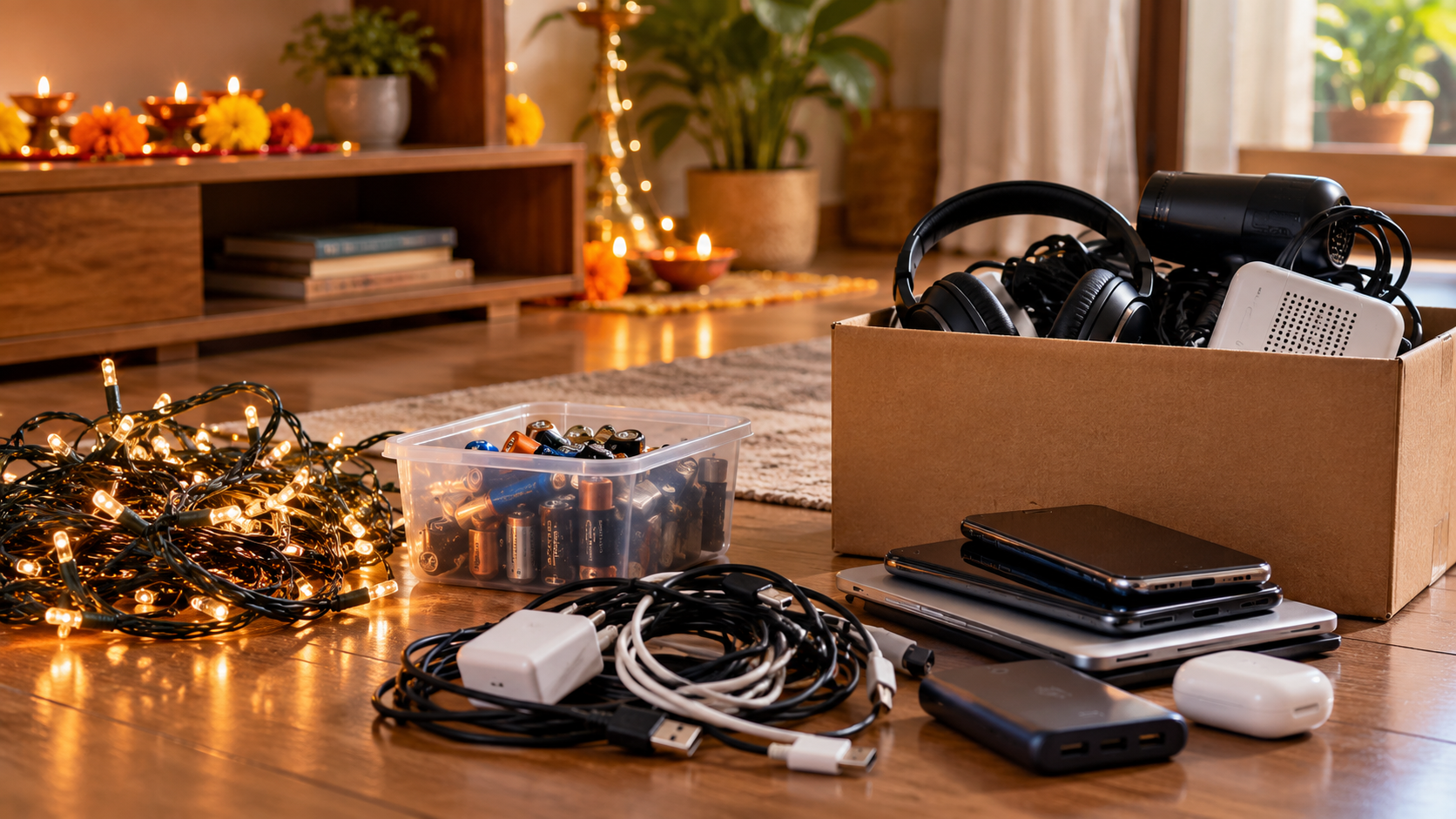
Diwali cleaning does not have to mean throwing things away.
It can also mean finally making decisions about the things that have been sitting unused for years.
Test the old lights before replacing them. Keep batteries separate. Find out whether the forgotten phone can have a second life. Repair appliances where it makes sense. Sort the cable drawer properly. And when an electronic product truly has reached the end of its life, take a little time to find the right recycling route.
The goal is not to keep every broken product forever.
It is simply to avoid treating electronics like ordinary rubbish.
A clean cupboard feels good. A clean cupboard where the unwanted electronics have actually gone somewhere responsible is even better.
Explore more organisations working across e-waste management and recycling on Made for Planet.
FAQs
Can old Diwali lights go in the household bin?
Electrical festive lights should be kept separate from ordinary household waste when they stop working. First check whether they can be repaired, then use an appropriate e-waste collection or recycling route if they are beyond repair.
Can used batteries be thrown in household waste?
No. India's Battery Waste Management Rules require waste batteries to be kept separate from mixed household waste and sent through appropriate collection, refurbishment or recycling channels.
What should I do with old chargers and cables?
Keep the ones you still need, pass on compatible working accessories where useful, and collect damaged or obsolete cables and chargers for an appropriate e-waste route.
Should I recycle an old phone that still works?
Not necessarily. Repair, resale, donation, trade-in or refurbishment can keep a functioning device in use before recycling becomes necessary.
Where can I find e-waste recyclers in India?
Look for registered or recognised collection and recycling channels, producer take-back programmes and local authorised services. Made for Planet also has an e-waste directory that can help you discover organisations operating in different parts of India.
What should I do before giving away an old laptop or phone?
Back up important information, sign out of your accounts and securely erase personal data before selling, donating, refurbishing or recycling the device.
Related topics

Share this blog


