
Sustainable Diwali 2026: 10 Ways to Celebrate Better
By Bhumeshwari Dangar • Oct 28, 2026

Diwali is a festival of light, colour, food, family and togetherness. Homes are cleaned and decorated, diyas are lit, sweets are exchanged, new clothes come out of wardrobes, and gifts travel between friends, families and workplaces.
All of that makes Diwali special. But it can also create a lot of short-lived consumption: decorations used once, excessive packaging, leftover food and things bought simply because they feel festive.
Celebrating a sustainable Diwali does not mean making the festival smaller. It simply means being more thoughtful about what we buy, what we reuse and what happens after the celebrations are over.
Here are ten simple ways to celebrate Diwali 2026 with less waste.
1. Start With the Decorations You Already Have
Before shopping for new Diwali décor, open the boxes from last year.
Brass diyas, lanterns, candle holders, fabric torans, festive cushions and decorative bowls can often be reused with almost no effort. Rearranging them differently can make a room feel new without replacing the entire festive setup.
Repair slightly damaged pieces too. Replace the string on an old toran, polish brass accessories or repaint a wooden decoration instead of discarding it.
If you do want to add something new, choose one or two pieces you genuinely love. For inspiration, Made for Planet’s guide to Sustainable Diwali Decorations 2026 features reusable and handcrafted décor ideas.
The simplest rule is also one of the most effective: use what you already own first.
2. Bring Back Traditional Clay Diyas
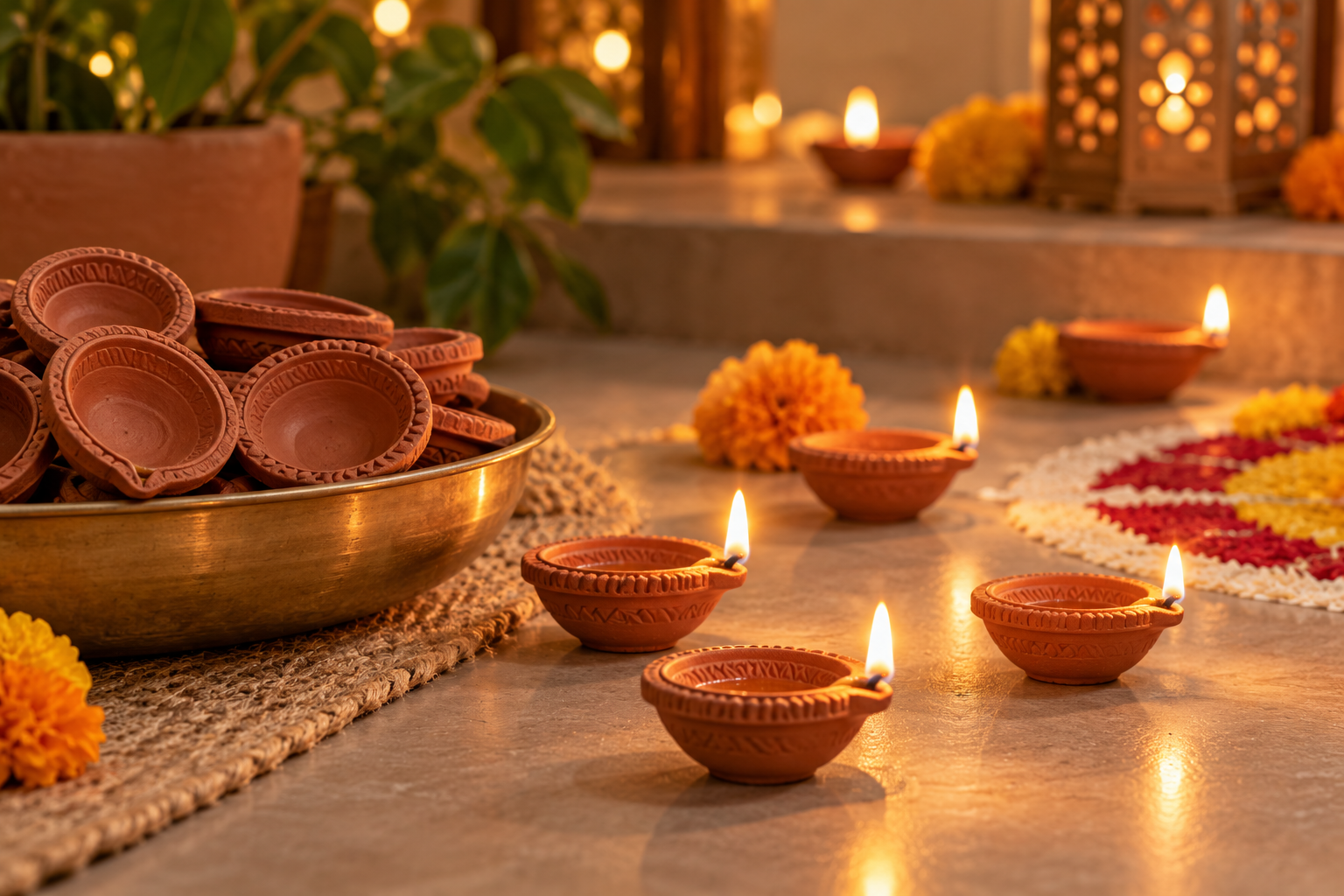
Few things represent Diwali as beautifully as rows of glowing diyas.
Traditional terracotta diyas offer a simple alternative to plastic-heavy novelty lights. Where possible, buy them from local potters and choose straightforward designs that can be reused.
After Diwali, intact diyas can be cleaned, dried and stored for another occasion. You do not need hundreds of them either. A few thoughtfully placed around a rangoli, balcony or pooja area can create plenty of warmth.
3. Make Rangoli With Flowers and Natural Materials
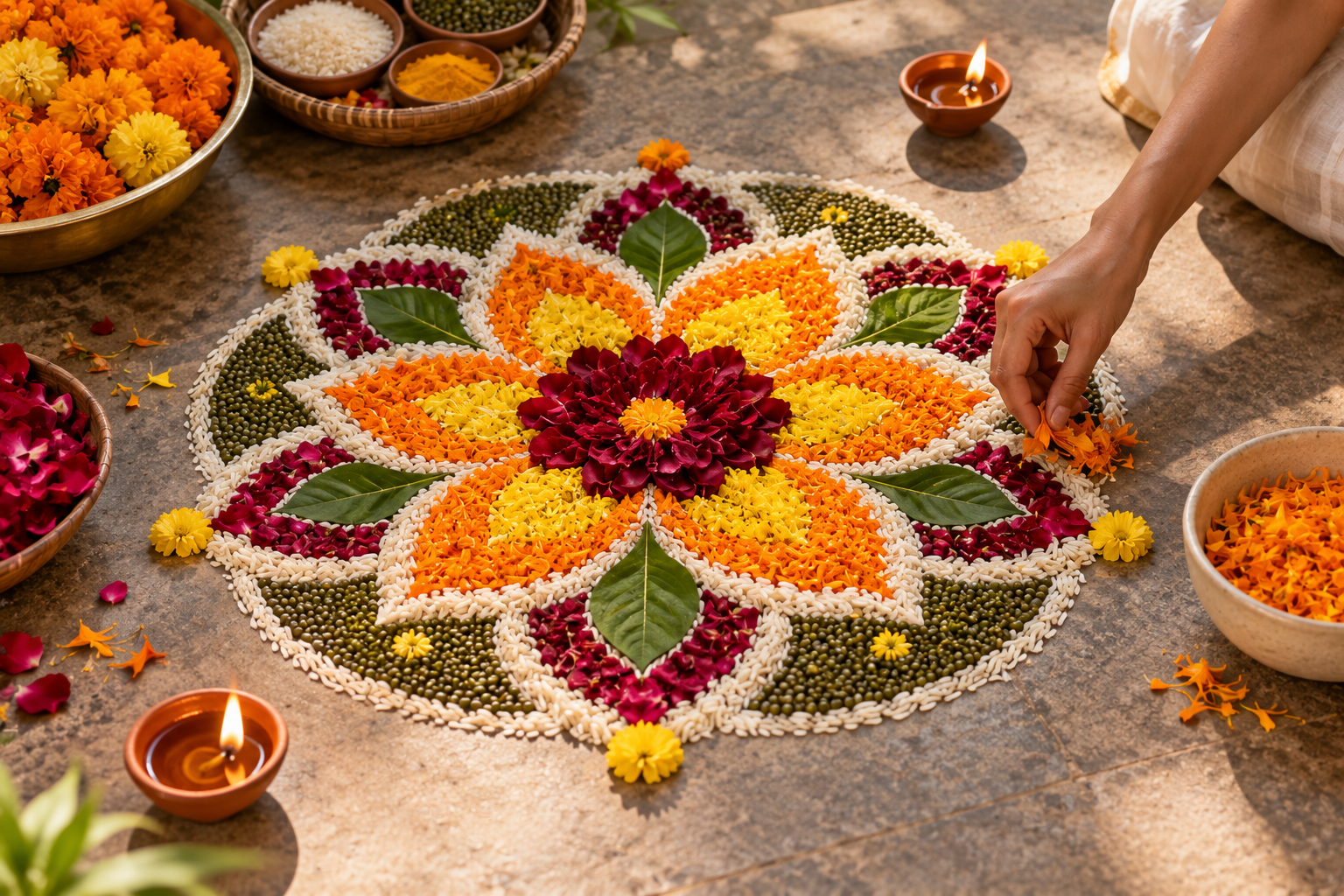
Rangoli does not need plastic glitter or sequins to stand out.
Flower petals, leaves, rice, pulses, turmeric and traditional rangoli powders can create colourful designs without adding hard-to-recover decorative pieces.
Use what is already available too. Marigold petals left over from garlands can become part of the rangoli instead of being discarded immediately.
The aim is not to make every design perfectly biodegradable. It is simply worth avoiding unnecessary plastic embellishments that become difficult to collect once scattered.
4. Rethink Festive Lighting
Diwali is the festival of lights, so using less light is hardly the point. Instead, think about how the home is lit.
Reuse strings of lights from previous years rather than replacing them because another colour is trending. If a set stops working, check the plug, adaptor and connections before throwing it away.
Energy-efficient lighting can also reduce electricity use compared with older decorative bulbs. For anyone buying new lighting, India’s Bureau of Energy Efficiency is a useful place to understand energy-efficient products and standards.
Combine electric lights with diyas and lanterns rather than covering every surface with another new string.
And once Diwali ends, coil lights carefully before storing them. Good storage can make the difference between using them again and buying another set next year.
5. Give Gifts People Will Actually Use
Diwali gifting can easily become a cycle of giving things simply because gifts are expected.
A better starting point is the recipient.
Would they enjoy food? Something useful for the home? An experience? A handmade product? Something they already use regularly?
A smaller, thoughtful gift can be better than an enormous hamper filled with things that may never be opened. Made for Planet’s Eco-Friendly Diwali Gifts 2026 guide has more ideas based around usefulness and lower-waste gifting.
For workplaces, giving employees a choice between a few options can also be more practical than sending everyone identical branded merchandise. The employee Diwali gifting guide explores this in more detail.
6. Reduce the Packaging Around Your Gifts

Sometimes the packaging around a Diwali gift is more elaborate than the gift itself.
Boxes inside sleeves, wrapped in plastic and placed inside another decorative box might look impressive briefly, but much of that material can quickly become waste.
Reuse good-quality gift bags. Wrap presents in fabric. Repurpose clean paper. If you are giving food, consider containers the recipient can actually use again.
Made for Planet’s guide on making a sustainable gift box also has practical packaging ideas.
For businesses, the Central Pollution Control Board maintains India’s official plastic-waste resources and rules, including requirements around collection, segregation and plastic packaging.
Beautiful packaging and excessive packaging are not the same thing.
7. Rewear Your Festive Clothes
Diwali can sometimes feel like an unofficial deadline for buying a new outfit.
But a saree, kurta, lehenga or jacket does not become less beautiful because it appeared at another celebration.
Try restyling pieces you already own. Change the blouse, dupatta, jacket, jewellery or footwear. Borrow or swap occasionwear with friends or family. Rental can also make sense for pieces you would otherwise wear once.
If you do buy something new, choose a piece you can imagine wearing at weddings, family gatherings and future festivals.
The most sustainable festive garment may already be hanging in your wardrobe.
8. Plan Festive Food More Carefully
Food is central to Diwali. Sweets arrive at homes, families prepare elaborate meals and offices distribute boxes in large quantities.
Generosity is part of the celebration, but large quantities can also mean food that never gets eaten.
Plan portions around the number of guests. Serve smaller quantities first and refill dishes when necessary. Store leftovers quickly and safely, and share excess food when appropriate.
FSSAI also publishes guidance on reducing and repurposing food waste, including sharing edible surplus through food-collection organisations.
Festive abundance should mean everyone has enough, not that food has to be thrown away afterwards.
9. Use Flowers More Thoughtfully
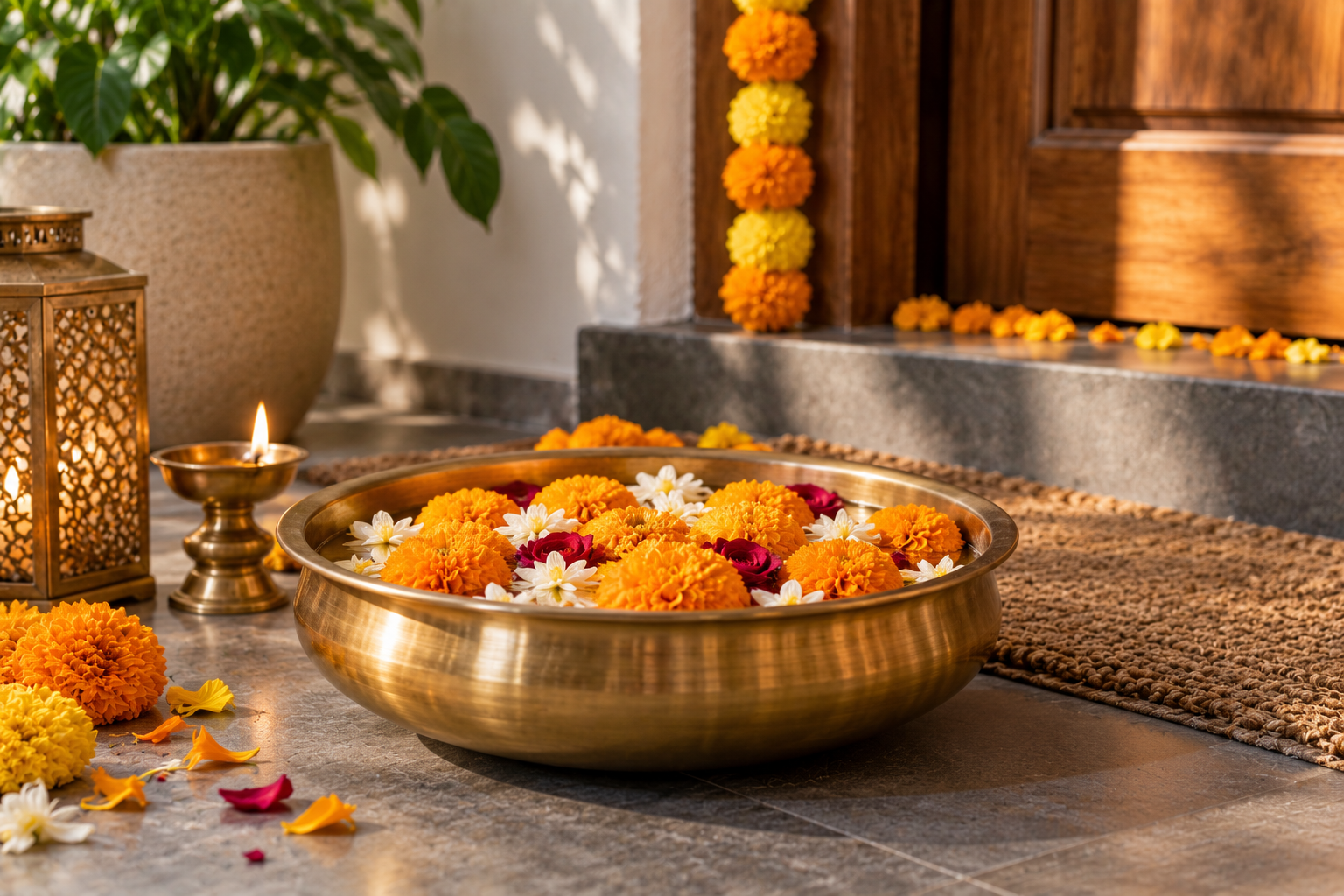
Fresh marigolds and other flowers can transform a Diwali home, but even natural decorations can be used more thoughtfully.
Instead of relying entirely on fresh flowers to fill every space, combine them with reusable brass accessories, existing textiles and decorations from previous years.
After the celebration, separate flowers from plastic thread, tape, staples and synthetic decorations. Clean floral waste may be suitable for composting where facilities are available.
If you already compost at home, Made for Planet’s blog section includes a beginner’s guide to composting.
The important distinction is between something that can be reused and something that actually is reused.
10. Think About What Happens After Diwali
Sustainability does not stop when the last diya goes out.
The morning after the celebration matters too.
Separate recyclable packaging instead of mixing everything together. Store gift bags, ribbons and boxes before they are accidentally discarded. Clean diyas and décor you want to keep. Compost suitable flowers where possible.
India’s CPCB waste-management resources include information on municipal solid waste, plastic waste and segregation systems.
If you have received gifts you know you will not use, pass them on while they are still new rather than allowing them to sit untouched for years.
A little organisation after Diwali can prevent buying the same decorations and accessories again next year.
Sustainable Diwali Is Not About Making the Festival Smaller
It is easy for sustainability advice to become a long list of things people should not do.
That is not the goal.
Homes should still glow. Families should still exchange sweets, decorate entrances, dress up and give gifts.
The opportunity is simply to celebrate with more intention.
Reuse the toran you love. Light traditional diyas. Wear the saree that still makes you feel special. Give someone something they will actually use. Serve great food without preparing twice as much as necessary.
None of these choices make Diwali less festive.
A more sustainable Diwali does not have to be perfect. It can simply be a Diwali where we enjoy more of what matters and waste a little less of what does not.
FAQs: Sustainable Diwali 2026
What is a sustainable Diwali?
A sustainable Diwali focuses on celebrating while reducing unnecessary waste and consumption through reuse, thoughtful gifting, lower-waste décor and better food planning.
How can I celebrate an eco-friendly Diwali at home?
Reuse decorations, choose clay diyas, avoid unnecessary disposable décor, rewear festive clothing and reduce packaging and food waste.
What are alternatives to plastic Diwali decorations?
Clay diyas, fabric torans, bamboo or wooden decorations, reusable metal décor, flowers and existing home accessories are good options.
How can Diwali gifting be more sustainable?
Choose useful gifts based on the recipient, reduce packaging and consider food, experiences, handmade products or durable everyday items.
How can I reduce food waste during Diwali?
Plan portions, serve smaller quantities first, store leftovers safely and avoid ordering more sweets than can realistically be consumed.
Can I celebrate sustainably without buying eco-friendly products?
Yes. Reusing what you already own and avoiding unnecessary purchases can be more sustainable than replacing everything with new alternatives.
What should I do with decorations after Diwali?
Clean and store reusable items, separate recyclable packaging, compost suitable floral waste and keep gift bags or boxes that will genuinely be reused.
Related topics
Get AI-Powered Recommendations

Share this blog


